Repair guides

Garage Door Bangs or Thuds When Closing

By Emil Garage Doors · Published November 2, 2026 · 5 min read · Repair guides

Short answer

A garage door that bangs when it closes usually has one of three causes: the opener's travel or force settings are too aggressive, the springs no longer carry the door's weight so it drops, or loose or worn hardware makes the door shift as it comes down. Note where in the travel the bang happens, then work through the checks below.

Start with when the bang happens

The timing of the bang tells you most of what you need. A door that is smooth until the last few inches points to the opener. A door that drops or speeds up from the very top points to the spring system. A clunk partway down points to hardware or tracks.

What you hearLikely causeWho fixes it
Thud as the door meets the floorTravel set too long, or force set too high, on the openerYou, following the manual, or a technician
Door falls fast and slams, even with the opener disconnectedWorn or broken spring, a balance problemTechnician only
Clunk or rattle partway downLoose hinge, track bracket or rollerTechnician; do not touch the bottom brackets
Bang with a jerk or shudderWorn rollers or a bent trackTechnician
Bang with sagging or a gap at one sideCable or spring on one side has failedStop using the door and call

A guide to likely causes. A technician has to see the door to be sure.

Checks you can do safely

1

Watch a full close from the side

Stand clear of the door and use the wall control. Note whether the bang comes at the top, the middle or the floor.

2

Look at the floor line

Check the bottom seal for damage and the floor for debris or an uneven spot where the door lands.

3

Look, do not adjust, the hardware

Check hinges, rollers and track brackets for anything loose, bent or out of line. Write down what you see for the technician. Leave the bottom brackets alone, because DASMA says they are under extreme tension and only a trained technician should adjust or loosen them.

4

Run the balance test

Close the door, pull the red release handle to disconnect the opener, then lift the door by hand to about halfway. CPSC says a properly operating door stays in place when stopped in any partly open position. If yours drops, rises or feels heavy, lower it carefully and stop.

5

Test the reverse after any change

Lay a 2x4 flat on the floor and close the door. It must reverse when it touches the board. See garage door safety tests.

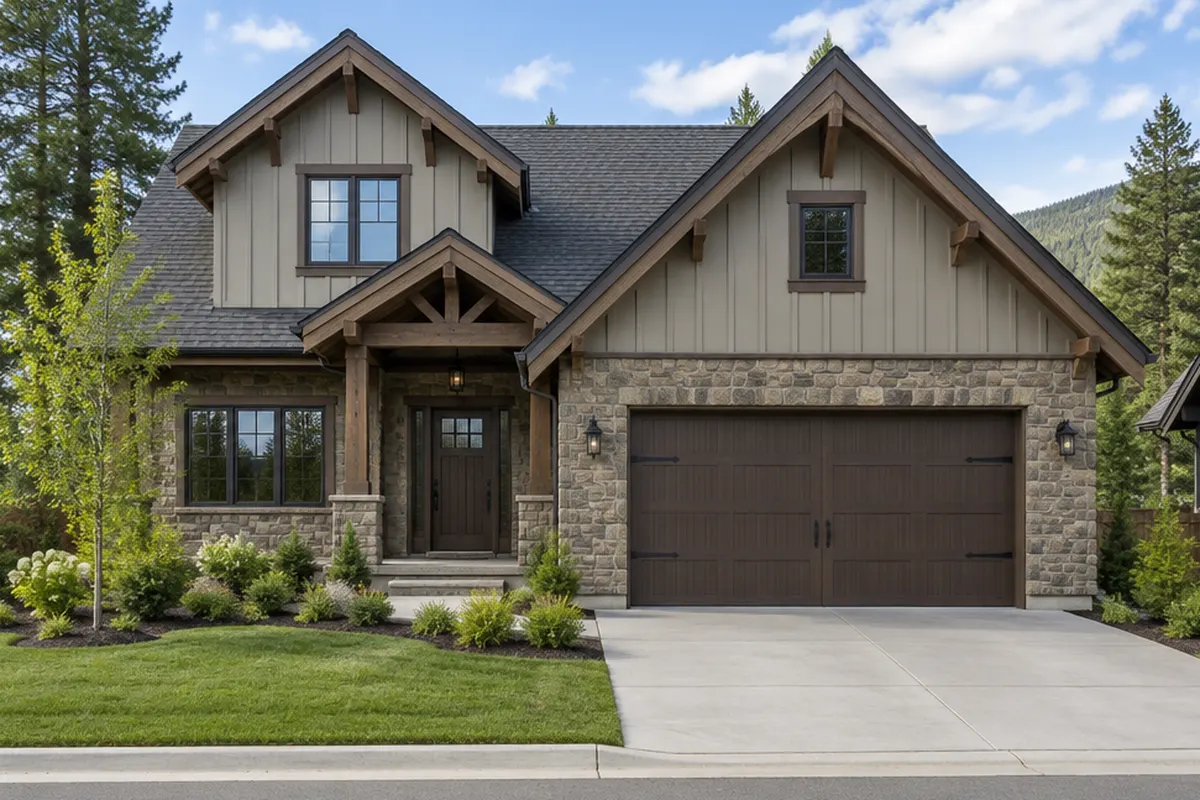
Alpine-style home with stone and board-and-batten siding, exposed rafters and a dark brown garage door with decorative hardware, illustrating the garage door bangs when closing guide, for homes near central Corona near the Corona Mall

When the opener causes the bang

Travel sets where the door stops, and force sets how hard the opener pushes. Clopay explains that a travel setting that is too long pushes the door against the floor, and force that is too high can slam it shut. Both are adjusted on the opener in small steps, and your owner's manual shows how for your model.

Never use force to cover a sticking door

Chamberlain is blunt: never use force adjustments to compensate for a binding or sticking garage door. A door that binds needs its rollers, tracks or springs looked at, not more push from the opener.

When the springs are the cause

If the bang comes with a fast drop, the door has lost its counterbalance. The springs hold most of the door's weight, and when they weaken the opener has to hold the door back instead. A door that closes too fast is covered in why a garage door closes too fast.

Springs and cables are under high tension

Do not adjust, wind or remove a torsion spring, and do not touch a cable or bottom bracket. DASMA says only trained technicians should handle spring systems and bracket adjustments. If the door is heavy, crooked or off track, stop using it and call.

What a technician checks

We start with the 12-point safety inspection at $89: springs, cables, rollers, tracks, sensors and the opener. Typical repairs follow from what we find. Rollers, sensors or a tune-up run $150 to $350, a torsion spring pair for a standard two-car door runs $250 to $450, and the final price is confirmed after we see the door. Worn rollers are covered in worn or squeaky rollers, and other noises in why a garage door is so loud.

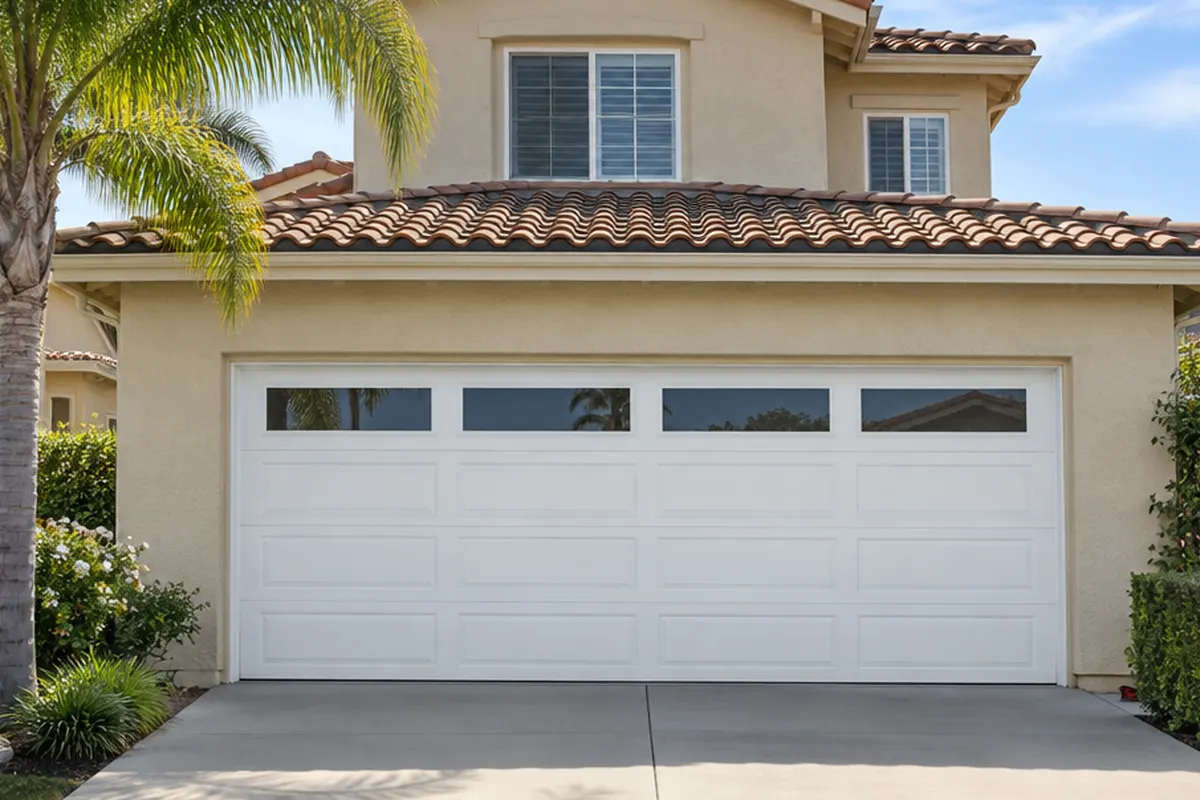
Tile-roof home with a white long-panel garage door and window row, illustrating the garage door bangs when closing guide, for homes near central Calabasas

Get it looked at

Emil Garage Doors repairs garage doors, springs, rollers and openers across Southern California, for example in Corona and Calabasas, and the city pages cover the rest of California, including Hanford. Call (213) 340-4232 or send the estimate form with what you hear and when. See garage door repair.

Questions people ask

Why does my garage door slam shut?

Either the opener's travel or force settings are too aggressive, or the springs no longer hold the door's weight and it drops. Disconnect the opener and lift the door by hand to halfway: if it will not stay put, it is the spring system.

Can I adjust the travel and force myself?

Opener travel and force are meant to be adjusted with the controls on the opener, in small steps, following the owner's manual. Test the reverse with a 2x4 after every change. Spring and bracket work is for a technician.

Is a banging garage door dangerous?

It can be. A bang that comes with a heavy, crooked or falling door means the spring or cable system may have failed, so stop using the door and call.

Will more force stop the door from bouncing back?

No. Extra force can make the door slam harder and can interfere with the safety reverse. A door that sticks needs its rollers, tracks or springs checked.

Need it looked at?

Call (213) 340-4232 or send your details for the soonest visit.

Call (213) 340-4232