
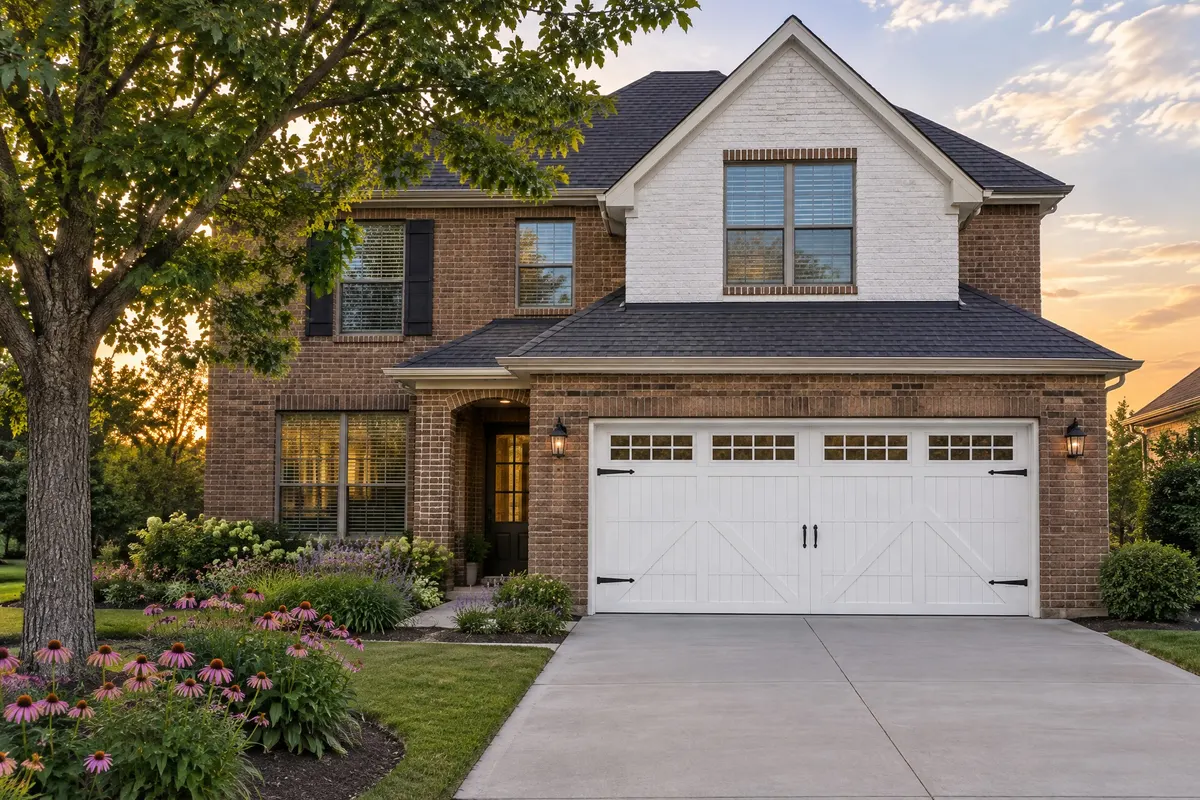
An attached garage shares walls, a ceiling and sometimes a floor with your living space, so any gap or thin spot there lets heat out. Start by sealing air leaks, then insulate. Check the garage door seals, the door into the house, the shared wall and any room built over the garage. Doing it in that order saves money.
1Why the garage matters
An unheated garage is outdoors with a roof. When it shares a wall with the kitchen, or sits under a bedroom, the temperature of the garage becomes the temperature next to your house. The State of Illinois energy guide lists the walls between living spaces and unheated garages, and the floors above unheated garages, as places to insulate. It says a floor over an unheated space such as a garage can be a source of considerable heat loss.
Clopay, a door manufacturer, adds that with an attached garage cold air can seep into the living space and make the heating system work harder, and that the energy savings from a better door are most noticeable in that case.
2Where the heat goes
Look at the garage as a list of weak points. The door is the largest single surface, but the others add up.
- The garage door: worn bottom seal, hardened side and top weatherstripping, thin single-layer panels
- The entry door to the house: gaps around the frame and under the door
- The shared wall: gaps where the wall and ceiling meet and around pipes and wires
- The ceiling or floor above the garage: little or no insulation
- Garage walls and attic access: gaps where the framing meets the house
3Seal first, then insulate
The Illinois guide says that before you add insulation, you should seal all uncontrolled air leaks in the thermal envelope. Insulation slows heat as it passes through a material, but it does not stop air from moving through a gap.
The U.S. Department of Energy lists the garage separation as its own air-sealing job: the construction gaps and the wall and ceiling interfaces shared between your heated rooms and an unfinished garage. It suggests foam backer rod with caulk, or low-expansion spray foam, to close them. The Illinois guide also says to weather-strip every door that leads to an unheated area, including the garage.
4What to check on the garage door
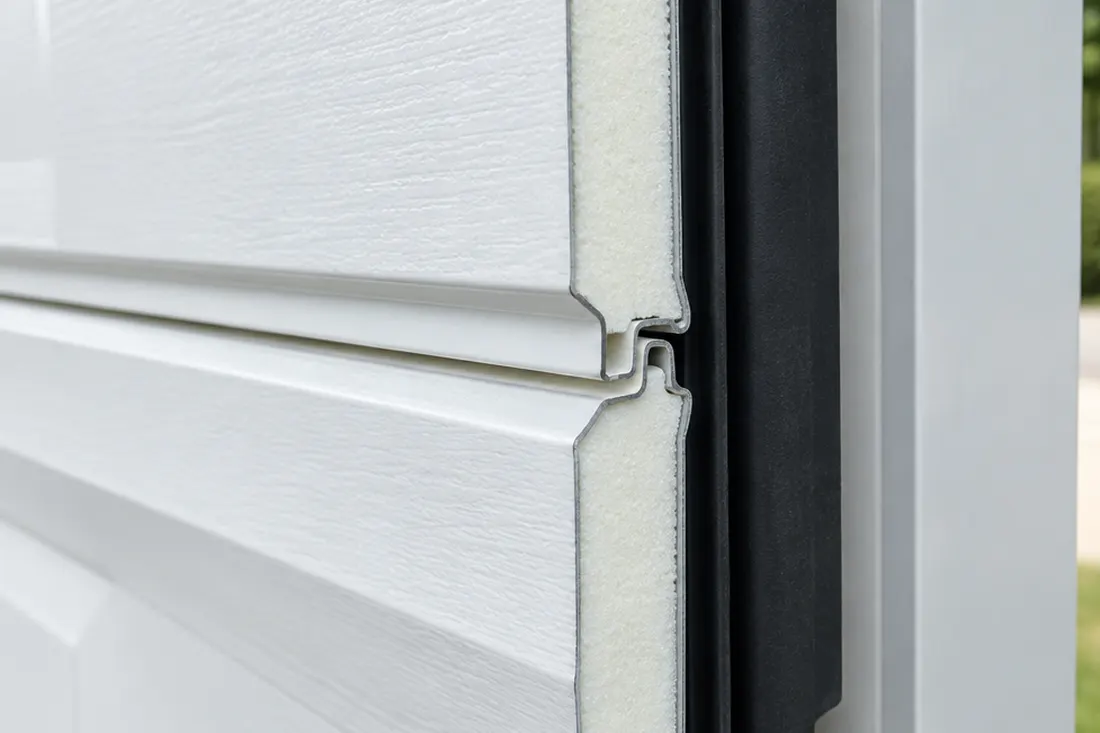
The door is the part we work on, so start with the bottom seal. A seal that is flat, cracked or pulled out of its channel lets in cold air and snow melt. Clopay recommends checking the seals every fall and replacing them every few years. If light shows under the closed door in the middle of the day, the seal needs work. See bottom seal replacement for how it is done.
On a cold day, hold your hand along the sides and bottom of the closed door. Moving cold air means the weatherstripping needs replacing.
5When to replace the door
If the door is a thin single layer of steel, or the panels are dented and the seals no longer fit, replacing the door can help more than patching it. Insulated doors cost more and are rated by R-value or tested U-factor. For the numbers see R-value for Illinois garages and new garage doors.
A tight, insulated door in a garage that still leaks through the walls will disappoint you. Treat the door as one step in a plan.
6A safety note about running a car
The Illinois guide warns that an attached garage where you let a car idle can create the same pressure problem that leads to back-drafting and carbon monoxide poisoning. Do not warm up a car inside an attached garage with the door closed. Open the door first and drive out.
7Who to call
Emil Garage Doors repairs garage doors, springs, cables and openers and installs new doors in Illinois, including Oak Park, Skokie and Berwyn. Call or send your details with a photo of the bottom of the door and the seal, and we book the soonest visit. See garage door repair for what a visit covers.
Questions people ask
Why is the room above my garage so cold?
The floor over an unheated garage can be a source of considerable heat loss, according to the State of Illinois energy guide. Air leaks and thin insulation there are the usual causes.
Should I seal or insulate first?
Seal air leaks first. The Illinois guide says to seal all uncontrolled leaks before adding insulation.
How do I keep cold air out of the garage door gaps?
Replace a worn bottom seal and the side and top weatherstripping. Clopay recommends checking the seals every fall.
Does an insulated garage door make a difference in an attached garage?
Yes. Clopay says the savings are most noticeable when the garage is attached. Seals and the shared walls matter too.
Services that fit this problem
Garage door and gate help near you
We repair and install in these cities. Each page has local notes, prices and reviews.
More guides
Sources
- State of Illinois (keepwarm.illinois.gov): Home tightening, insulation and ventilation guide
- U.S. Department of Energy: Insulation and air sealing essentials (R-value, garage separation air sealing)
- Clopay: Insulated garage doors for cold climates (R-values by insulation type, seals, attached garages)