
Road salt and wet slush collect on the bottom panel, the track, the springs and the hinges, and that is where rust starts. Rinse the door with mild soap and water through winter, keep ice melt off it, lubricate with silicone and replace a worn bottom seal. Heavy rust on springs or cables needs a technician.
1Why salt matters on a garage door
Illinois towns use road salt on winter roads, and the same salt ends up on tires, driveways and the bottom of garage doors. The USGS found that road salt runoff, along with treated wastewater, dominates chloride loads in the Illinois Waterway from the Chicago region, with loads peaking in winter and early spring.
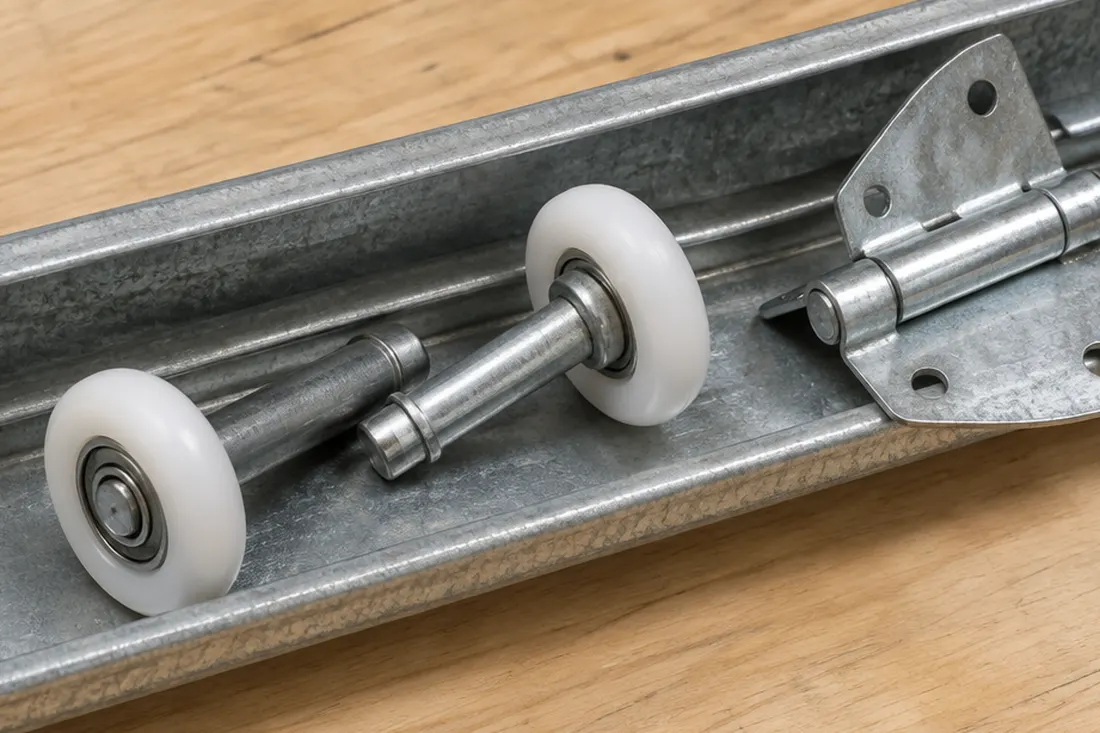
Raynor Door says salt residue clings to metal tracks, rollers, springs and hinges, and that the bottom edge of the door is the most exposed spot, where salt, moisture and debris gather. That matches what we look for first.
2Where rust starts
- The bottom panel and its bottom edge, where slush sits against the steel.
- Hinges and roller stems near the floor.
- The lower end of each track, where water and grit drain.
- Springs and cable ends, which are harder to see and slower to show damage.
- Screw heads and brackets that hold the weather seal.
Paint that is chipped by a shovel, a bumper or ice gives the salt a way in. A small chip is easier to touch up early than a bubble of rust later.
3What to check, season by season
| Season | What to check | Why it matters |
|---|---|---|
| Late fall | Bottom seal, paint chips on the bottom panel, lubricant on rollers and hinges | Start the salt season with a sealed, lubricated door |
| Winter | Wash off salt, wipe the tracks, keep ice melt off the door | Raynor suggests washing monthly in winter, and another section of its page says every couple of weeks |
| Early spring | Look for rust on the bottom panel, hinges, track ends and springs | Chloride loads peak in winter and early spring, so damage often shows up now |
| Summer | Touch up chips, replace worn seals, lubricate again | Fix small problems before the next salt season |
A schedule, not a rule. Follow your door maker's care instructions.
4How to wash and protect the door
Rinse the salt off
Use warm water and a soft cloth or sponge. Do the bottom panel, the lower track and the hinges first.
Use mild soap
Car wash soap or dish soap is enough. Avoid harsh cleaners and abrasive pads that scratch the finish.
Dry the bottom edge
Wipe the bottom edge and the seal so water does not sit on the steel.
Lubricate with silicone
Raynor recommends a silicone-based product on rollers, hinges and tracks, and warns that oil-based sprays can attract dirt. Do not lubricate nylon rollers.
Check the bottom seal
Replace a seal that is cracked, brittle or has gaps; see bottom seal replacement.
Touch up chips
Use paint made for your door's finish. Ask the door's maker if you are not sure which one.
5What to leave alone
A spring or cable with heavy rust can fail under load. Do not sand, grease, adjust or remove them yourself. Raynor calls spring replacement not a DIY job, and we agree. Stop using a door that is heavy, crooked or has a frayed cable and see spring repair.
Surface rust on a panel is a cosmetic problem you can treat. Rust that has eaten through the bottom of a panel is not. At that point the section, or the door, may need to be replaced; see new garage doors for what is involved.
6Who to call
Emil Garage Doors repairs garage doors, springs, cables and openers and installs new doors in Illinois, including Evanston, Oak Lawn and Oak Park. Send your details and a photo of the rust, and we book the soonest visit. We will tell you what is cosmetic and what needs a part.
Questions people ask
Does road salt damage garage doors?
Salt residue on metal tracks, rollers, springs, hinges and the bottom edge speeds up rust, according to Raynor Door. Washing it off and keeping the finish sealed slows the damage.
How often should I wash my garage door in winter?
Raynor suggests monthly in winter in one place and every couple of weeks in another. A rinse after a heavy salting is a sensible middle ground.
Can I use WD-40 on a salty garage door?
Raynor recommends silicone-based lubricant on rollers, hinges and tracks and says oil-based products can attract dirt.
Is rust on a garage door spring dangerous?
It can be. A spring with heavy rust can fail, and spring work is not a home repair. Stop using the door and call a technician.
Services that fit this problem
Garage door and gate help near you
We repair and install in these cities. Each page has local notes, prices and reviews.
More guides
Sources
- USGS: Using chloride and other ions to trace sewage and road salt in the Illinois Waterway
- Raynor Door: Protect your garage door from salt damage in winter (salt residue, washing, silicone lubricant, bottom seal)
- Clopay: Garage door cold weather maintenance (frozen bottom seal, ice melt, silicone lubricant)