
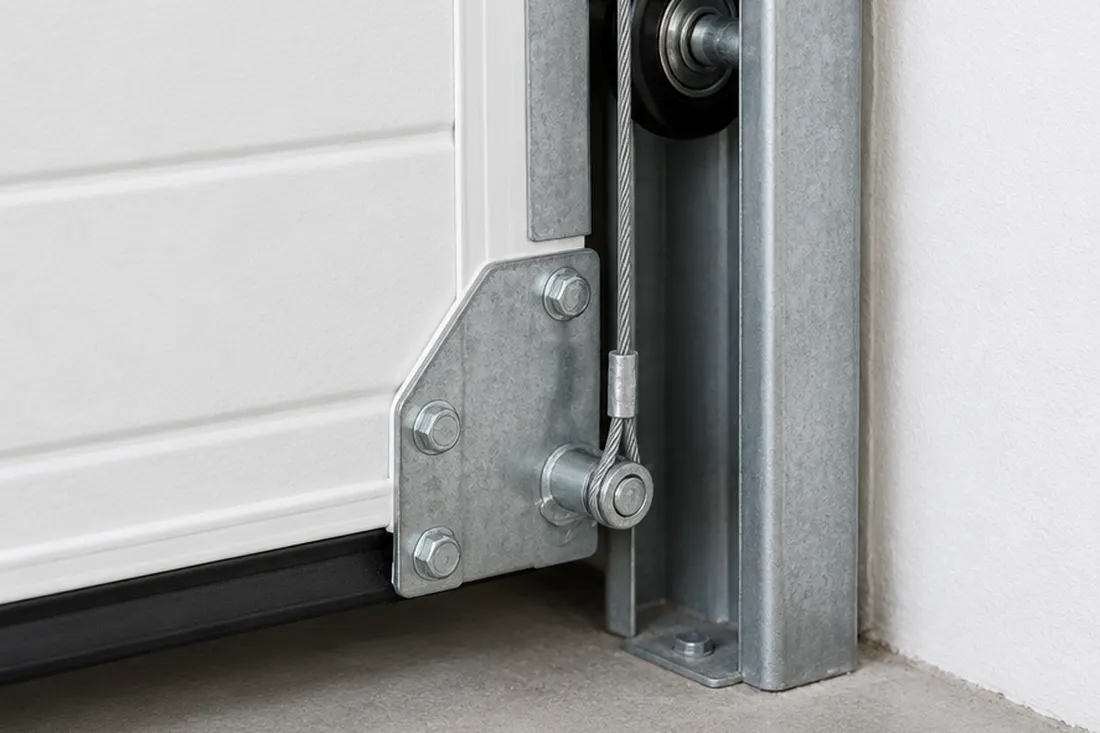
In a hard freeze, a garage door can fail at its weak points: a bottom seal stuck to the slab, a stiff opener, weak remote batteries and a door that binds in the track. Do not force it. Disconnect the opener, look for ice and damage, and if the door is crooked, heavy or a spring or cable is broken, stop and call a technician.
1Why a freeze is a test for the door
Garage doors in much of Texas see a freeze for a few nights in most winters, and then the weather turns mild. A deep freeze is different. In February 2021, NOAA reports, much of Texas had its coldest air since December 1989, every county was under a Winter Storm Warning, and Austin and Waco broke records for their longest streaks of below-freezing temperatures.
Homes built for mild winters do not always get cold-weather care for the garage door. That is not a flaw in your door. It just means a long freeze shows up the small problems that were already there.
2What can fail, and why
These are the usual weak points. We are describing what can happen. A technician confirms the cause on site.
- Bottom seal: water that gets under the door and freezes can hold the seal to the slab. If the opener keeps pulling, it can strain the door or tear the seal.
- Opener: a stiff door asks more of the motor and the drive. Read your opener manual for its working temperature range.
- Remotes and keypads: batteries can weaken in the cold. Fresh batteries are the first thing to try, and your manual says more.
- Rollers and hinges: dry or dirty hardware moves harder. Use the lubricant your door maker names and never put grease on the track, as Garaga advises.
- Safety sensors: ice, frost or a bump can knock them out of line, and the door then will not close. Chamberlain says a blocked or misaligned sensor is the cause of its 4-6 error.
3What to do before the next freeze
A few minutes now saves a cold morning later.
Run the door by hand
Pull the red release handle and lift the door a little. It should move smoothly and stay where you leave it. Then reconnect the opener.
Check the bottom seal
Look for splits, flat spots or gaps. A worn seal lets water in. See garage door repair for seal work.
Clean and lubricate lightly
Wipe the track and rollers. Use a lubricant your door maker approves on the rollers, hinges and the curved track sections.
Replace batteries
Change batteries in remotes and the wall keypad if they are old.
Check the sensors
Both sensor lights should be steady. Wipe the lenses with a soft dry cloth.
4If the door is stuck after a freeze
Press the button once. If the door does not move, or moves a little and stops, pull the red release handle and stop. Forcing it can bend a track or section, damage the opener or snap a cable.
If the bottom is frozen to the floor, let the area warm up. Do not chip at the seal with a tool and do not pour hot water on it, because that can freeze again. Once the door moves freely by hand, reconnect the opener.
5Signs you need a technician
Call if the door hangs crooked, scrapes, feels heavy by hand, or lifts on one side only. Those are signs of a broken spring, a slipped cable or a bent track. Never try to adjust a torsion spring or a cable yourself, because both are under heavy tension. See spring repair and cable repair.
Our 12-point safety inspection is $89. It checks springs, cables, rollers, tracks, sensors and the opener. The final price of any repair is confirmed after we see the door.
6Who to call
Emil Garage Doors repairs garage doors, springs, cables and openers and installs new doors in Texas, including College Station, Killeen and Tyler. Call or send your details with a photo of the problem. For the rest of the weather picture, see how Texas climate changes garage door care.
Questions people ask
Can a garage door freeze shut?
Yes. Water under the bottom seal can freeze and hold the door to the slab. Do not force it. Pull the release handle, let it thaw and check the seal.
Why won't my garage door close in the cold?
A frost-covered or knocked sensor, a stiff door or a weak remote battery are common causes. Chamberlain says a blocked or misaligned sensor causes its 4-6 error. Check the sensor lights first.
Should I keep using the opener on a stuck door?
No. Pull the red release handle and stop. Forcing a stuck door can damage the opener, a track or a cable.
How often does Texas get a deep freeze?
Not often in most places, which is why many garages are not prepared. NOAA reports the February 2021 freeze brought the coldest air to much of Texas since December 1989.
Related services
Need help near you?
We repair and install in these cities. Each page has local notes, prices and reviews.