
A garage door that will not close is rarely a mystery. These are the three checks that solve most cases.
If your garage door goes down a few inches, stops and goes back up, the safety reverse is working, and it is telling you something is wrong. Most of the time the cause is one of three things: the safety sensors, the balance of the door, or a setting on the opener.
1. The safety sensors
Two small photo-eye sensors sit about six inches off the floor on each side of the door. A beam passes between them. If the beam is blocked or the sensors are not lined up, the door will not close, and the opener light often blinks. Wipe both lenses with a soft cloth, check that nothing is in the path and look at the indicator lights: a steady light on each sensor usually means they are aligned. If a sensor is loose, tighten its bracket and nudge it until the light holds steady.
2. The balance of the door
Disconnect the opener with the red release handle and lift the door by hand. A balanced door lifts easily and stays about waist high when you let go. If it feels heavy, drops fast or will not stay up, a spring has lost tension or broken, and the opener thinks something is in the way because the door is working against it. Do not keep running the opener. See garage door spring repair.
3. The opener settings and the track
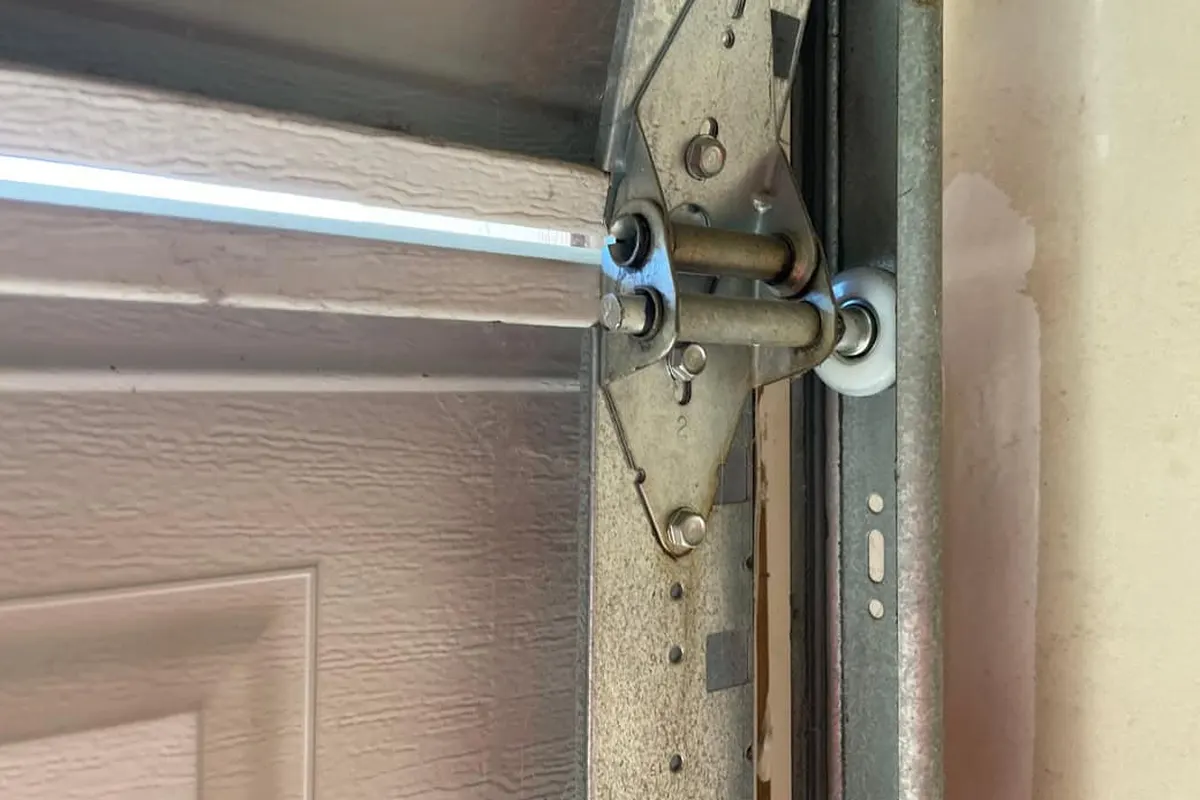
Openers set the down limit and the force. If the limit is set too far, the opener can reverse when the door touches the floor early. Bent track, a stuck roller or a crooked door can also trip the reverse. Look along both tracks for dents, gaps or debris and check that the rollers turn. A dirty or damaged track often needs garage door repair and not a new opener.
When to call
Call if the door feels heavy, hangs crooked, shows a gap in the spring above it or has a cable hanging loose. Those mean parts under tension, and they are not DIY jobs. If the sensors and track are clean and the door still reverses, the opener may need adjustment or repair: see opener repair.
Questions people ask
Why does my garage door close and then open again?
That is the safety reverse. A blocked or misaligned sensor, or a door that is out of balance, triggers it. Clean the sensors and test the balance.
Can I close the door by hand?
Pull the red release handle and lower the door slowly. If it falls or will not stay up, a spring is the problem; do not use it and call for service.
Do the sensors need replacing?
Not usually. Most are cleaned and realigned. If the wire is damaged or the light never turns steady, they need replacing.
Keep reading
- How Long Do Garage Door Springs Last? Signs It Is Time to Replace
- Insulated vs Non-Insulated Garage Doors: Which Do You Need?
- Electric Gate Will Not Open: What to Check Before You Call
Related services: