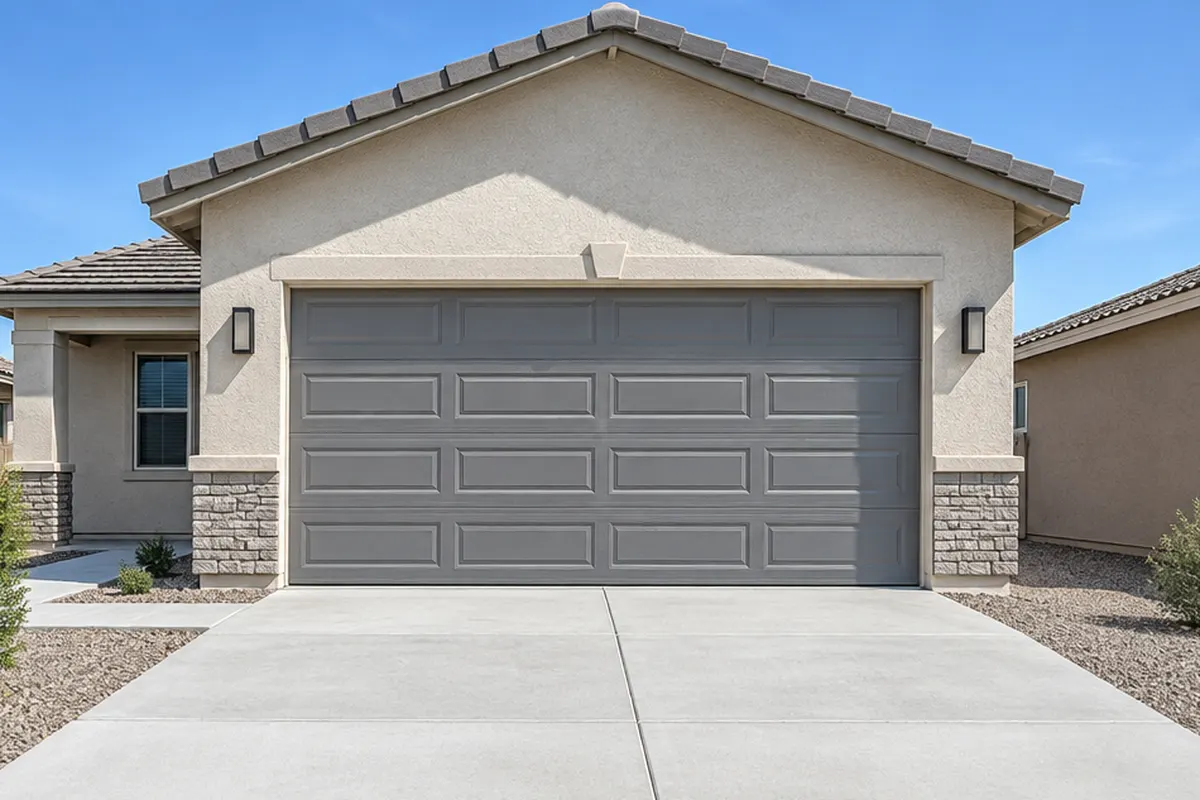
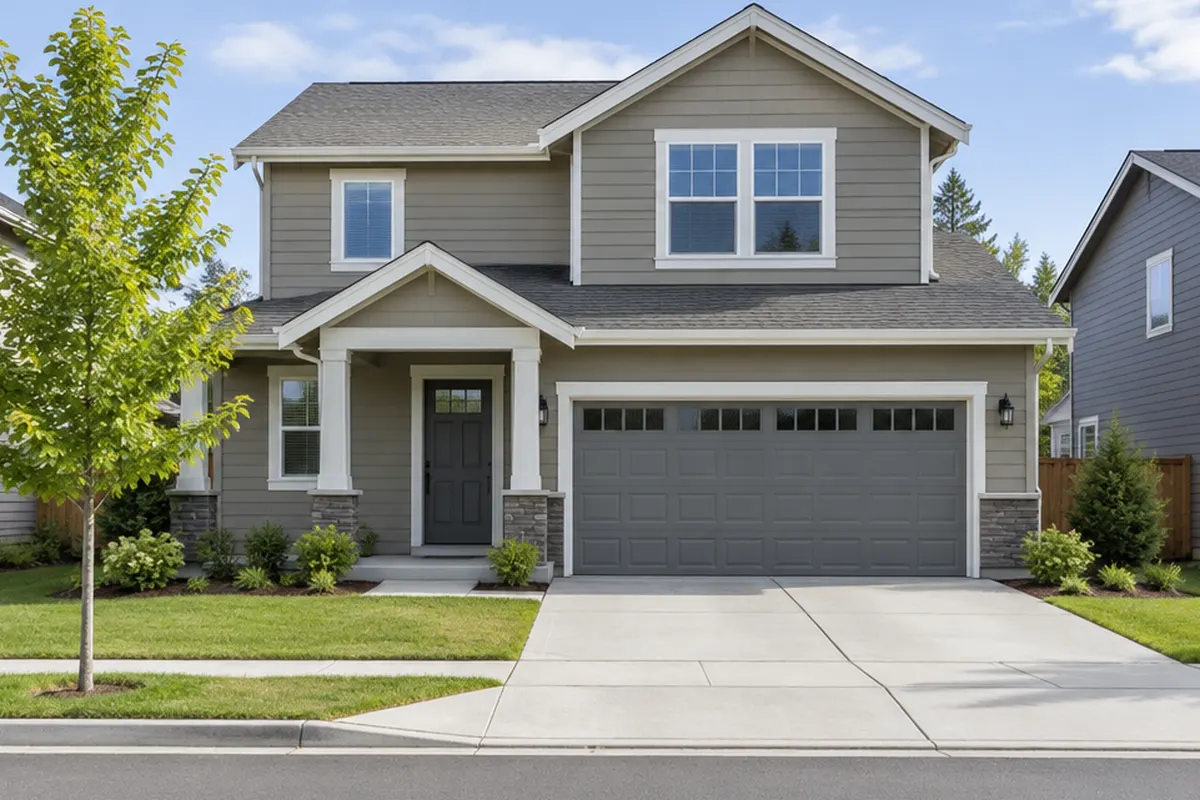
Most garage doors that will not open have a simple cause: no power to the opener, a wall control in lock mode, a disconnected release handle or a manual lock. If the opener runs but the door is heavy, crooked or stops after a few inches, suspect a broken spring or cable. Stop pressing the button and call a technician.
Garage Door Won't Open: What to Check First
Start with what the door and opener are doing
What you see and hear tells you where to look. Match your situation to the table, then work through the checks below in order.
| What happens | Likely cause | What to do |
|---|---|---|
| Nothing happens and the opener light is off | No power to the opener | Check the outlet and the breaker |
| Wall button works, remote does not | Remote battery, or the wall control lock is on | Turn the lock off and replace the battery |
| Opener hums or runs, door does not move | The release handle was pulled and the door is disconnected | Reconnect it with the door closed |
| Loud bang, then the door will not lift | Broken spring | Stop and call a technician |
| Door rises a few inches, then stops | Spring, cable or binding problem | Stop and call a technician |
| One side is lower than the other | Cable off the drum or door off track | Stop and call a technician |
A sensor problem usually stops a door from closing, not opening. See why a garage door will not close.
Five checks, in order
The opener is not designed to lift the full weight of the door without spring help. Running it against a broken spring can burn out the motor, strip the gears or drop the door. Pull the release handle only when the door is closed.
Check the power
Look at the opener light and the outlet. Plug a lamp into the same outlet, and look at the breaker.
Check the lock and the remote
On many Chamberlain and LiftMaster wall controls, the opener lights flash twice when the LOCK button is on, which blocks the remotes. Press LOCK to turn it off. Replace the remote's battery if the wall button works but the remote does not.
Look for a manual lock
Some doors have a lock bar or a keyed lock on the door itself. If it is engaged, the opener cannot move the door. Unlock it and try again.
Check the release handle
If the opener runs but the door stays put, the door may be disconnected from the opener. Reconnect it with the door fully closed, the way your owner's manual shows. The pull direction depends on the opener type, and some models reconnect when you run the opener.
Look, but do not lift
From the floor, look at the spring above the door, at the cables on both sides and at the tracks. A gap in the spring coil, a loose cable or a crooked door means a spring, cable or track problem. Do not try to lift the door.

What you can fix and what you cannot
Power, batteries, the wall control lock, a manual lock and a pulled release handle are safe to check yourself. Springs, cables, brackets and tracks are not. The Door & Access Systems Manufacturers Association (DASMA) says spring systems should be repaired only by trained professionals and that frayed or worn cables should be replaced only by a trained technician.
Chamberlain also says to call a trained door technician if a door binds, sticks or is out of balance, because an unbalanced door may not reverse when it should. See signs of a broken spring for what to look for, and a blinking sensor light if the opener light flashes.
Power outage or opener problem?
If the problem started with a power cut, the opener may only need power back and a reconnected handle. See what to do after a power outage. If the opener has power and lights up but the door still will not move, a technician can tell a failed opener from a door problem by testing it with the door disconnected.
When to stop and call
- You heard a loud bang just before the door stopped working
- The door feels very heavy, or it stops after rising only a few inches
- A cable is loose, hanging or off its drum
- The door is crooked, off its track or dented
- The opener has power and runs, and the release handle is connected, but nothing moves
Do not force the door up. A door with a broken spring can fall, and lifting it by hand risks your back. Keep people and pets away from it until a technician has looked.

Get it checked
Emil Garage Doors repairs garage doors, springs, cables and openers across Southern California, for example in Alameda, Arroyo Grande and Arvin. Our 12-point safety inspection is $89. Tell us what you saw and heard when you call (213) 340-4232, or use the estimate form on this page, and see our garage door repair page for what we cover.
Questions people ask
Why won't my garage door open when I push the button?
Check power first, then the wall control lock, then whether the release handle was pulled. If the opener runs but the door does not move, the door is likely disconnected, or a spring is broken.
Why won't my garage door open with the remote?
A dead remote battery or a wall control set to LOCK is the usual reason. If the wall button works and the remote does not, try a new battery and turn the lock off.
Can I fix a garage door that won't open without hiring a repair person?
You can check power, batteries, the lock and the release handle yourself. Springs, cables and tracks need a trained technician because they are under high tension.
What does it mean if the door opens a few inches and stops?
It often points to a broken spring, a cable problem or the door binding. Stop using the opener and have the door looked at.

Our related services
City pages near you
We repair and install in these cities. Each page has local notes, prices and reviews.
Read next
Sources
- Chamberlain Group support: Why do the lights on my garage door opener flash and my door will not close
- Chamberlain Group support: How to test the balance of a garage door
- Door & Access Systems Manufacturers Association (DASMA): Garage Doors safety tips
- Raynor Garage Doors: signs of a broken garage door spring
Need it looked at?
Call (213) 340-4232 or send your details for the soonest visit.