
Embers can get into a garage through gaps around the door, and a garage usually holds things that burn. California's wildfire building code says exterior garage doors in covered areas must keep gaps at the bottom, sides and top to no more than 1/8 inch. Check your seals, close the gaps and ask your local building department which rules apply to your home.
Why the garage door matters
The University of California's fire network says embers entering through door gaps or vents are extremely dangerous, because garages usually hold many flammable items. Windblown embers can travel ahead of a fire, so a house that is not touched by flames can still have an ember problem at its weakest opening.
A garage door is a large opening with a long seam around it. If the seal along that seam is cracked, worn or missing, an ember has a path in.
What California's code says
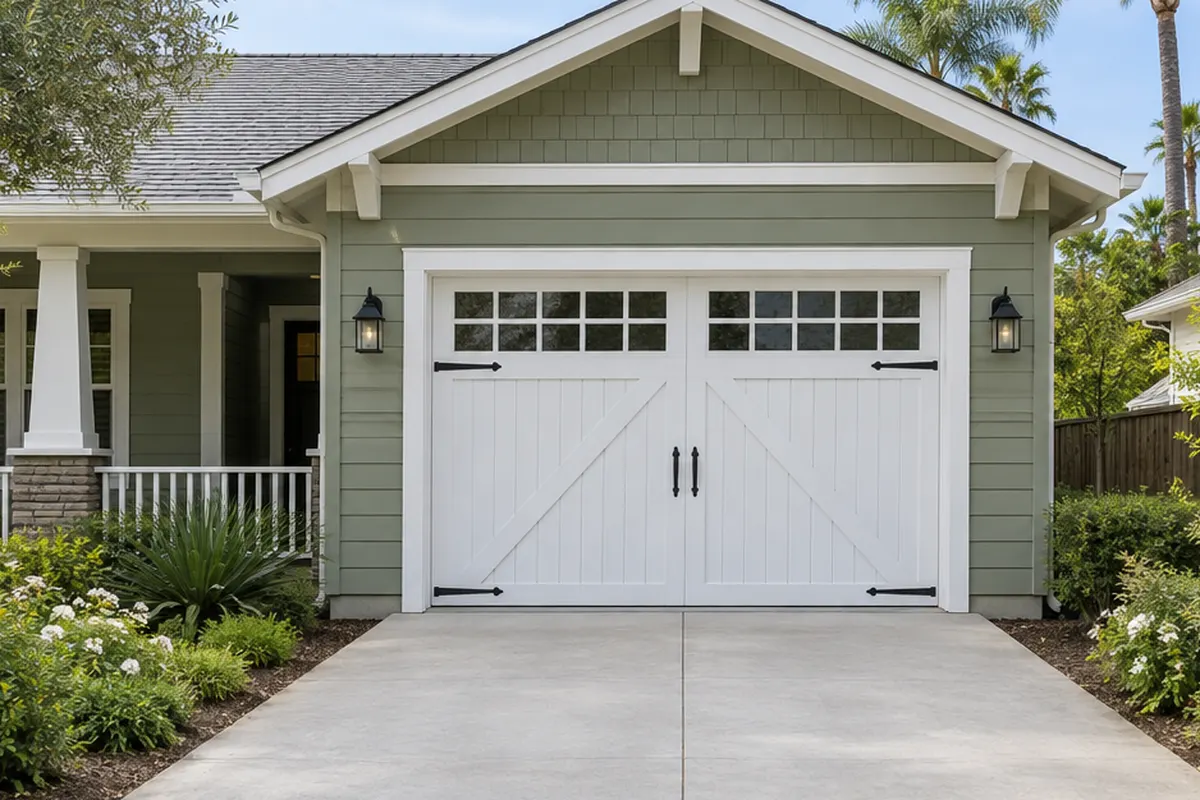
The Wildland-Urban Interface provisions of the California Building Code, in section 708A.4 (garage door perimeter gap), say exterior garage doors must resist the intrusion of embers by preventing gaps between the door and the opening, at the bottom, sides and top, from exceeding 1/8 inch. DASMA, the door industry association, summarizes the code this way in its technical data sheet.
The code lets builders control the gap with one of three methods: weatherstripping made of materials tested for UV exposure and flammability, a door that overlaps the jambs and header, or jambs and header covered with metal flashing. The sheet quotes the 2016 code; editions and local adoption change, and the rules apply in designated areas. Ask your local building department whether your home is covered.
Where to look on your door
| Where | What to check | What a fix looks like |
|---|---|---|
| Bottom edge | Gap at the floor, a seal that is cracked or flattened | New bottom seal, adjusted door travel |
| Left and right sides | Light visible between door and jamb | Side weatherstripping, or material over the edge of the opening |
| Top of the door | A seal that no longer touches the header | Top seal or header flashing |
| Door vents or windows | Vents in the door itself | Fire-resistant vents, as the UC fire network suggests |
| Door and frame joints | Cracks in trim, framing or wall near the door | Fill or plug gaps and holes |
UC fire network: fill or plug holes or gaps on or around your garage door.
How to seal the gaps
Close the door and look for daylight
Go into the garage on a bright day and look along the bottom, sides and top for light.
Inspect the seals
Garaga lists a cracked, dried out, discolored, droopy or stiff seal as a sign it needs replacing.
Replace worn weatherstripping
The UC fire network suggests weatherstripping along the top and bottom and the sides. For the code's detail, see the DASMA data sheet.
Cover gaps a seal cannot fill
The UC fire network says to cover them by extending materials over the edges of the opening.
Have the door's travel checked
For roll-up doors, the UC fire network says adjusting the mechanism after installation helps the door close fully. That involves the springs and cable drums, so it is a technician's job.
What not to do
- Do not adjust the spring tension yourself to close a gap; a door that is out of balance can drop.
- Do not rely on a gap fix alone. Embers also enter through vents, so check those too.
- Do not ignore vents or openings near the door; the UC fire network flags these as ember paths too.
Read gap under the door and side and top weatherstripping for the parts of a replacement.
Talk to us about your door
Emil Garage Doors replaces seals, adjusts doors and repairs springs, cables and openers; see garage door repair. We work in cities such as Yucaipa, Azusa and Lake Elsinore. Call (213) 340-4232 or use the estimate form. We cannot tell you which fire code applies to your home; your local building department can. Our 12-point safety inspection is $89.
Questions people ask
How big a gap can a garage door have under California's wildfire code?
Section 708A.4 of the California Building Code limits the gap at the bottom, sides and top of an exterior garage door to 1/8 inch, in the areas where the code applies, according to DASMA.
Does my existing home have to meet this rule?
That depends on your local building department and when your home was built. The code applies in designated areas, so ask the department.
Where do embers enter a garage?
The University of California's fire network lists gaps in the garage door and vents. Garage door gaps and vents are both worth checking.
Can I seal my own garage door gaps?
Replacing weatherstripping is a basic job for many homeowners, but adjusting the door or the springs is not. Leave those to a technician.
Keep reading
Sources
- DASMA Technical Data Sheet 186: vehicular access doors and the wildland-urban interface (California Building Code section 708A.4)
- University of California Agriculture and Natural Resources, Fire Network: the garage and wildfire
- Garaga: signs your garage door needs new weatherstripping, and how to maintain it