
Water under a garage door in the rain usually means the bottom seal is cracked, flattened, the wrong shape for your floor, or out of its retainer. Pull the old seal out, clean the channel, slide in a matching new seal and check it for light and gaps. If the retainer is damaged or the door binds, call a technician.
1Why water gets under a garage door
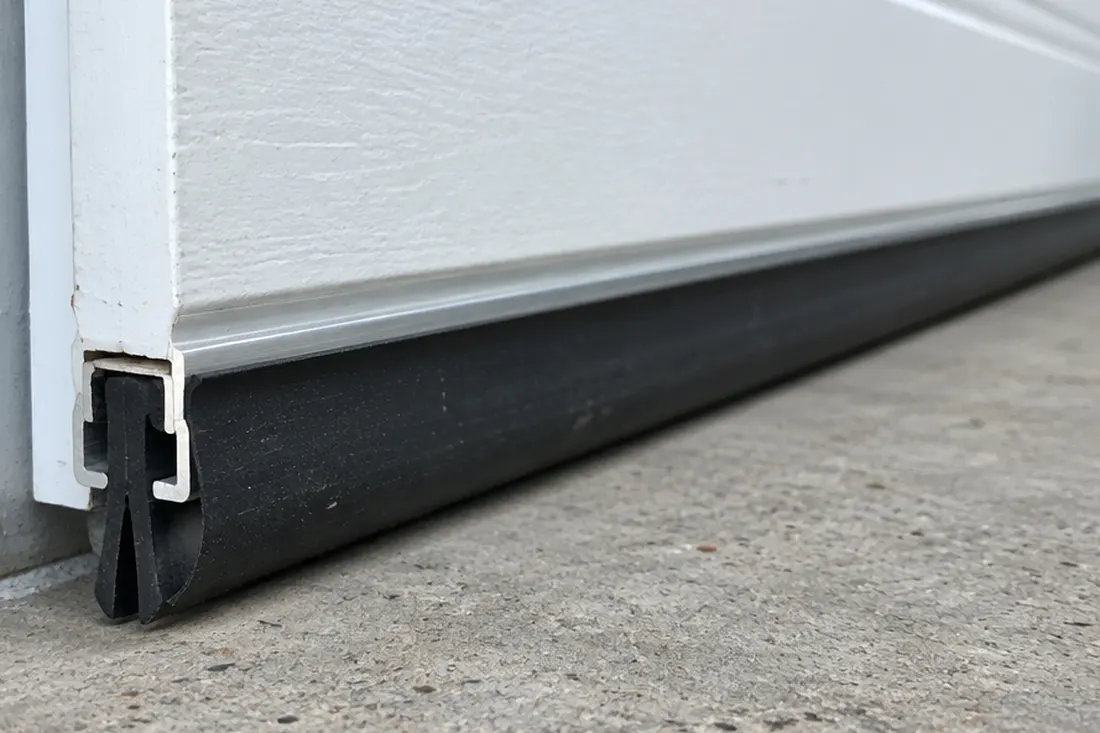
The bottom seal is a strip of vinyl or rubber that presses against the floor. Clopay says to replace a seal that is cracked, crushed or no longer springing back into shape, and that most seals need replacing every 2 to 3 years depending on climate and use. A worn seal lets in water, drafts, pests and daylight.
In wet Washington weather the seal is damp for months, so it ages faster than in a dry garage. Water can also come in because the floor slopes toward the door or the seal does not match the gap. Check both before you buy a new one.
2Find where the water comes in
Look at the seal when the door is closed
Check along the bottom for cracks, flat spots, missing pieces and gaps. Daylight or a draft means it is not sealing.
Run a hand along the floor
A dip or slope at the threshold can leave a gap that a straight seal will not close.
Check the ends
Water often enters at the corners where the seal ends or the side strip is worn.
Look at the retainer
The metal channel holding the seal should be straight and tight. A bent or loose one will not hold a new seal.
3Pick the right seal
| Seal type | How it works | Good to know |
|---|---|---|
| T-style | Slides into a single or double channel on the bottom of the door | Easy to replace, according to Clopay |
| U-style (bulb) | Compresses to form a strong seal | Useful on rough or uneven garage floors |
| Vinyl | Resistant to moisture and UV | Less flexible in cold and may not seal as tightly on rough concrete |
| Rubber | Flexible and handles temperature changes well | Can stiffen and crack over time |
Match the new seal to the shape in your retainer before you buy. Clopay suggests finding the door's model number first.
4Replace the bottom seal
Close the door and unplug the opener or pull the release
The door should not move while you work.
Pull out the old seal
Slide it out of the retainer from one end, using a flat screwdriver or pliers for stuck sections.
Clean the channel
Scrape out dirt and corrosion and wipe the channel so the new seal slides freely.
Measure and cut
Cut the new seal slightly longer than the door width.
Slide in the new seal
Feed it into the retainer from one end. A little dish soap on the seal helps it slide.
Trim and test
Trim the extra length and lower the door. Check for gaps, then run water along the base to see whether it holds.
A silicone-based lubricant keeps seals flexible and stops them sticking in cold weather, according to Clopay. Avoid petroleum-based products.
5What to avoid
- Do not loosen or remove the bottom brackets at the corners of the door. They are under tension and are not part of the seal job.
- Do not force a seal that does not fit. A wrong shape will leave a gap or bind the door.
- Do not use sealant or caulk as a long-term fix for a worn seal.
- Do not ignore a door that sticks, scrapes or hangs crooked after the job.
6When to call a technician
Call if the retainer is bent or loose, the bottom panel is rusted or swollen, the door binds, or water still comes in after you replace the seal. See garage door repair for what a technician checks, and rain, moisture and garage doors for the seasonal view.
7Who to call
Emil Garage Doors repairs garage doors, springs, cables and openers and installs new doors in Washington, including Federal Way, Everett and Tacoma. Call or send your details with a photo of the bottom seal and the floor and we book the soonest visit.
Questions people ask
Why does water come under my garage door when it rains?
Usually a worn, flat or wrong-shaped bottom seal, or a floor that slopes toward the door. Check both.
How often should I replace the bottom seal?
Clopay recommends replacing most seals every 2 to 3 years depending on climate and use, and sooner if the seal is cracked, crushed or no longer springs back.
What is the difference between T-style and U-style seals?
A T-style seal slides into a channel on the bottom of the door. A U-style seal is a bulb that compresses to seal against an uneven floor.
Can I replace a garage door bottom seal myself?
Often yes, if the seal slides out and the retainer is in good shape. Do not loosen the bottom brackets, and call a technician if the retainer is damaged or the door binds.
Services that fit this problem
Garage door and gate help near you
We repair and install in these cities. Each page has local notes, prices and reviews.