
Cold does not make a spring break by itself. A torsion spring is built for a set number of openings and closings, and when it has used them up it can snap on any day, including a freezing one. Winter just makes the failure easier to notice. If the door feels heavy or a spring looks broken, stop using it and call a technician.
Do garage door springs break more often in the cold?
Many homeowners say so, and it is easy to see why. The first hard freeze is often the morning someone hears a loud bang from the garage. A common explanation is that steel contracts in the cold and becomes more brittle.
We could not find a manufacturer or standards page that gives a temperature at which a spring breaks, so treat that as a popular belief, not a rule. What manufacturers do say is that a spring wears out with use. Garaga, a door maker, says torsion springs should last around 10,000 cycles and adds that they can also be affected by rust and cold weather.
What is a cycle, and why does it matter more than the weather?
One cycle is one full opening and one full closing. A spring is rated for a number of them, and every trip out for work, every return and every trip to the bins counts. Garaga estimates a spring at three to five cycles a day gives plenty of life, and it puts average torsion spring life at roughly five to seven years.
A spring that is near the end of its rating is the one most likely to let go. A cold morning may be the day it happens, but the wear came earlier. That is why a door that is several years old is worth a check before winter, not after the bang.
Quick facts: myth versus fact
| Common belief | What is known | What it means for you |
|---|---|---|
| Cold snaps snap springs | No temperature limit was found; manufacturers point to cycles, rust and cold together | Check an older door before winter |
| A loud bang means the opener broke | More often it is the spring letting go | Stop and look; do not press the button |
| The door still lifts, so the spring is fine | A broken spring leaves the door very heavy and the opener strains | Do not force it open |
| You can warm the spring up | Nothing about heat fixes a worn spring | Replace it, never wait for a thaw |
Springs, cycles and rust are the facts the manufacturer states; the rest is practical advice.
How can I tell a spring has failed?
- A loud bang from the garage, often with no one near the door
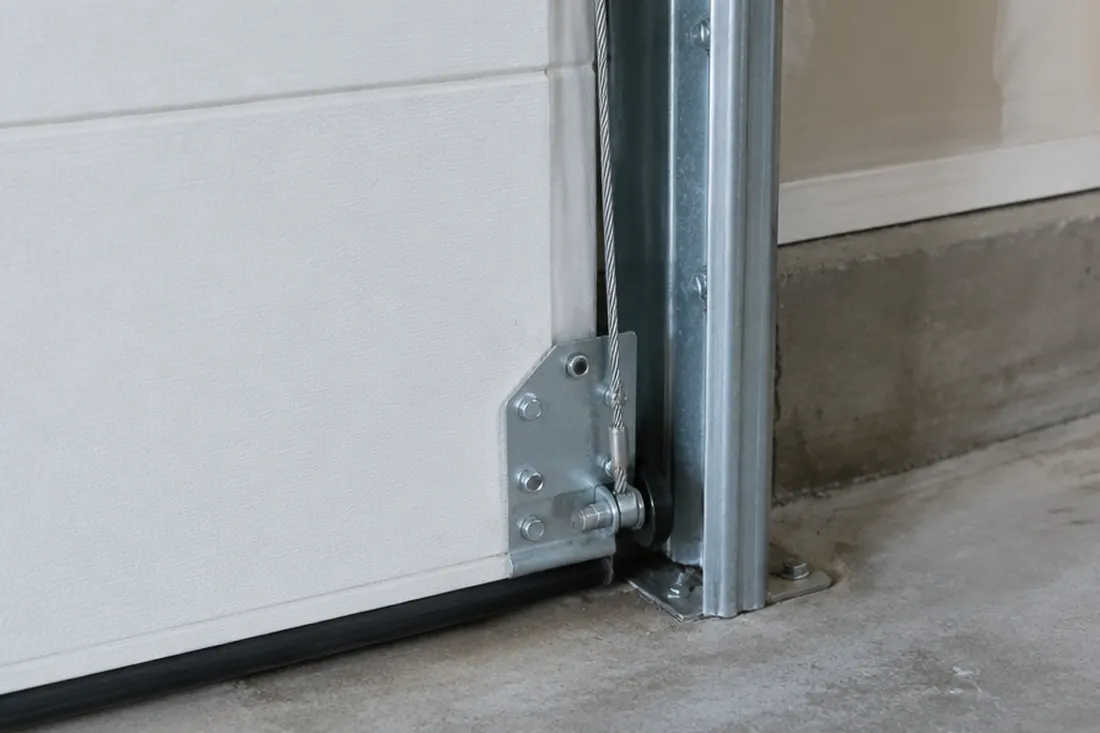
- A gap in the coils of the spring above the door, usually a few inches wide
- A door that will not rise, or one that feels very heavy by hand
- An opener that hums or strains but only lifts the door part way
- A door that slams down or looks crooked when released
Any one of these is enough to stop using the door. For the related cold-morning behavior of the opener itself, see why an opener runs slowly in the cold.
Can I adjust or replace a spring myself?
A torsion spring stores the force that lifts the door. Garaga warns that a broken spring can let the door fall rapidly and strongly advises against doing the repair yourself, and LiftMaster warns that weak or broken springs can drop an open door without warning. Do not wind, unwind, loosen or remove a spring. Do not stand under a raised door with a bad spring.
What you can do is watch, listen and call. Keep people and cars clear of the door until a technician has looked at it. If the door is up, leave it up and stay out from under it.
What should I do after a cold snap?
Look at the spring from the floor, with the door closed. Note any gap in the coils, rust or new noise. Run the door once by hand with the opener disconnected: it should lift smoothly and stay in place about halfway. If it does not, the balance is off and the spring needs attention.
Keep the hardware dry where you can, and do not skip the check on a door that sees heavy daily use, since it reaches its rated cycles sooner. See garage door spring replacement cost for what a replacement involves.
Who to call
Emil Garage Doors repairs garage doors, springs, cables and openers and installs new doors in Massachusetts, including Holyoke, Amherst and Pittsfield. Call or send your details, tell us what you saw and heard, and we book the soonest visit. Our spring repair visit covers both springs, the cables and the balance of the door.
Questions people ask
Do garage door springs break in cold weather?
They can break on a cold day, but no source we found gives a temperature that breaks a spring. Springs wear out by cycles, and rust and cold can add to that wear.
How long do garage door springs last?
Garaga says torsion springs should last around 10,000 cycles and estimates an average of about five to seven years. A door used many times a day reaches that sooner.
Is it safe to use the door with a broken spring?
No. The door becomes very heavy, the opener strains and the door can drop. Stop using it and call a technician.
Can I fix a garage door spring myself?
We do not recommend it. A spring holds a lot of force, and manufacturers advise leaving the repair to a professional.
Services that fit this problem
Garage door and gate help near you
We repair and install in these cities. Each page has local notes, prices and reviews.