
Road salt is mostly sodium chloride, and it rides on slush onto the bottom panel, the seal, the lower rollers and the track. Wet salt keeps metal damp and speeds rust. Rinse the lower door and track with fresh water through winter and again in spring, never spread salt under the door, and watch for flaking paint and rust at the bottom edge.
Why road salt reaches your garage door
The U.S. Geological Survey says sodium chloride is the most widely used deicer, with calcium and magnesium chloride also in use. Chloride does not break down. It stays in the slush and runoff, and moves with the water.
Cars carry that slush into the driveway, and salty spray can settle on the bottom panel, the seal, the lower track and the bottom bracket, which is why rust usually starts low.
Why wet salt speeds up rust
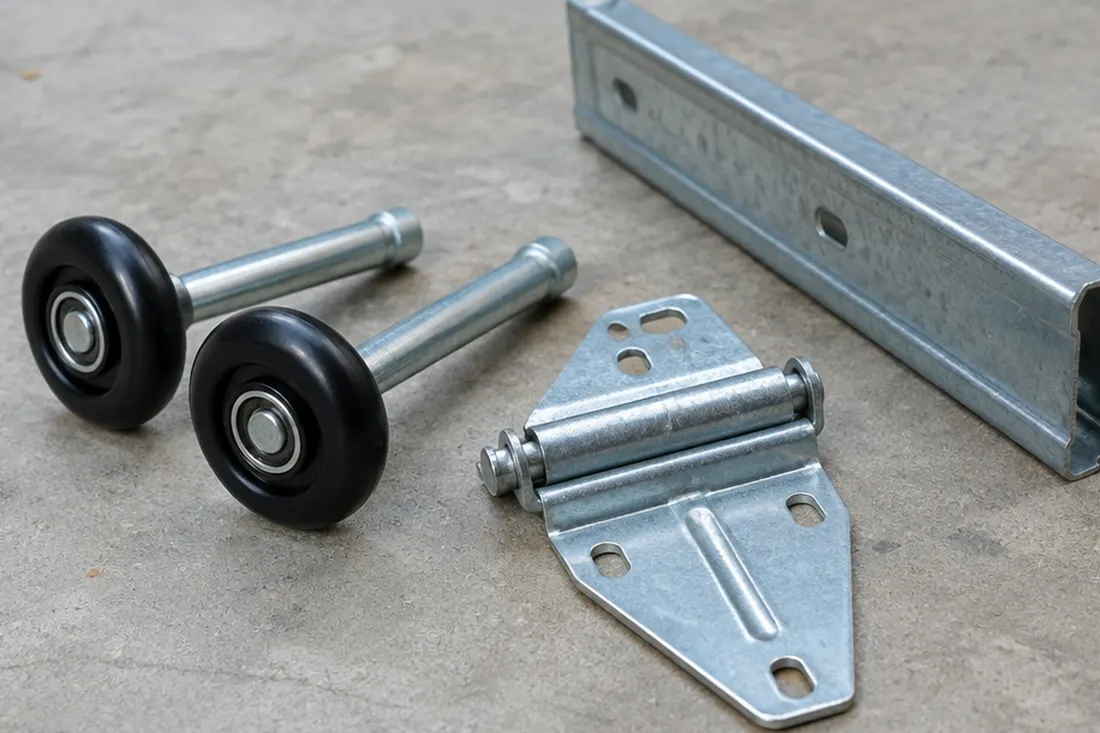
FEMA's guidance on metal connectors describes the same effect with sea salts, which are mostly sodium chloride. Salt on a surface speeds the reactions that cause rust, and the longer a surface stays damp, the faster it corrodes. Winter slush keeps the lower door damp for days.
That is why the bottom of a steel door, the bottom bracket and the lowest rollers look worse than the top. A scratched or chipped finish gives the salt a place to start.
What to check, part by part
| Part | What salt does | What to look for |
|---|---|---|
| Bottom panel | Eats at paint and the coating on steel | Bubbling paint, orange stains, flaking at the edge |
| Bottom seal | Dries out and cracks the rubber | Cracks, a droopy or stiff seal, a gap at the corners |
| Lower hinges and bracket | Rust builds in the joints | Orange crust, stiff hinges, a loose bracket |
| Lower track and rollers | Grit and salt pack the track | Gritty rollers, a rough ride, a door that shakes |
| Concrete threshold | Salt can damage the slab edge | Pitting or crumbling where the seal sits |
Garaga says salt under the door damages the concrete and the rubber.
A simple winter routine
Rinse the lower door
On a mild day, rinse the bottom panels, the seal and the lower track with fresh water to wash off salt.
Dry the seal and clean it
Wipe the seal with a vinyl-safe cleaner, then dry it so it does not freeze to the slab.
Use silicone, not oil
Garaga advises a silicone-based lubricant on the seal and says petroleum-based oils break down the rubber.
Touch up chips
Mark scratches at the bottom edge and have them touched up before rust spreads.
Repeat in spring
Rinse the whole door and the track again once the snow is gone, then check the seal and rollers.
Do not put salt under the door
Garaga says never to put salt under the door, because it damages the concrete and the rubber. Sand gives some traction against freezing, but it stops working once it is wet. If ice keeps forming at the threshold, fix the drainage instead of adding more salt.
Do not spray, scrub or adjust the springs or the cables to remove rust. They are under tension and a slip can injure you. If a spring or cable looks rusty or frayed, stop using the door and call a technician. See spring repair.
A door with heavy rust on the bottom panel may need a new section or a new door. See new garage doors if the damage is widespread.
Who to call
Emil Garage Doors repairs garage doors, springs, cables and openers and installs new doors in Massachusetts, including Beverly, Lowell and Haverhill. Call or send your details with a photo of the bottom of the door and we book the soonest visit. Related: salt air and garage doors.
Questions people ask
Does road salt damage a garage door?
Yes. Wet salt speeds corrosion on the bottom panel, brackets, hinges and track, and it dries out the rubber seal. Rinsing it off with fresh water slows the damage.
How often should I rinse my garage door in winter?
A rinse on a mild day after salty storms is a good habit, and a full rinse in spring. Garaga suggests rinsing dust and dirt off at least twice a year.
Can I put salt at the bottom of the door to stop ice?
No. Garaga says salt under the door damages the concrete and the rubber seal. Use drainage fixes and clear the threshold instead.
Is rust on the bottom panel a safety problem?
Surface rust is mostly cosmetic, but heavy rust can weaken the panel and the bracket. Rusty or frayed springs and cables need a technician.
Related services
Need help near you?
We repair and install in these cities. Each page has local notes, prices and reviews.
Keep reading
Sources
- U.S. Geological Survey: Deicing New England's roads, parking areas and walkways (sodium chloride, how chloride moves)
- FEMA NFIP Technical Bulletin 8: Corrosion protection for metal connectors and fasteners in coastal areas (salt spray, distance from the ocean, sheltered surfaces)
- Garaga: How to maintain the weatherstripping on your garage door (water under the door, salt, cleaning, lubricant)