
Santa Ana winds are strong, hot, dry winds that blow from the inland desert toward the Southern California coast. They are most common from October through March and usually last one to five days. A garage door is a large opening, so check its tracks, seals and photo eyes, and have a plan for a power outage.
What Santa Ana winds are
The National Weather Service describes a Santa Ana wind as a condition in southern California in which strong, hot, dust-bearing winds descend to the Pacific coast from the inland desert.
A NOAA National Weather Service climate bulletin adds that these events are most common in October through March, typically last one to five days and can last ten days or more. Gusts differ from place to place, so this post gives no wind speed for your street. Use your forecast for that.
Why a garage door matters in high wind
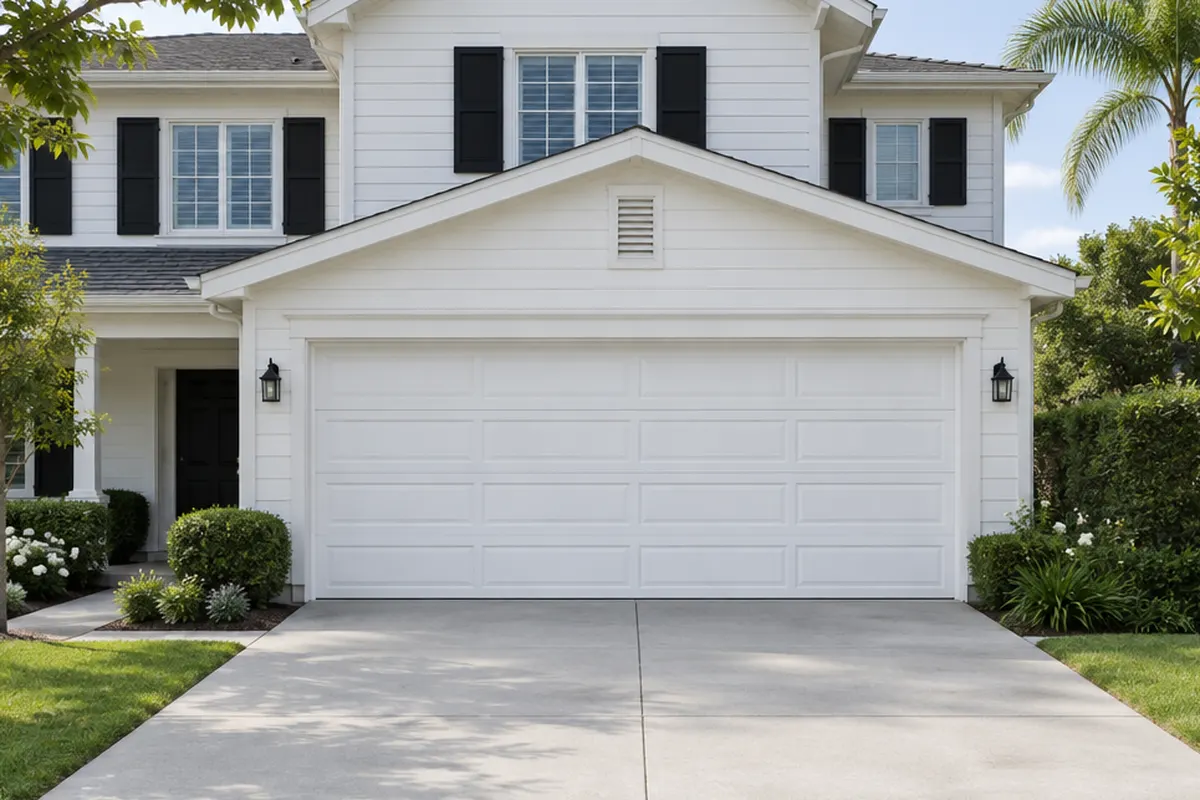
A garage door is one of the largest openings in a house. The Insurance Institute for Business and Home Safety (IBHS) calls a compromised garage door a damage amplifier: when wind pushes the door in, pressure builds inside the home, pushing up on the roof and out on the walls.
IBHS names three ways a door fails: weak tracks that buckle under high wind, flying debris that pierces the door, and inadequate attachment that lets the door pull away from the building. Most of its research looks at severe storms, so use it as a reminder to look at the door, not as a forecast for any one city.
What to check, by when
| When | What to check | Why |
|---|---|---|
| Before a wind event | Move loose items away from the door; check the door is fully closed and the tracks and brackets look straight | Flying debris and loose parts are the usual trouble |
| Before a wind event | Look at the red release handle and the opener's battery backup | A power outage can stop the opener |
| During the wind | Keep the door closed and keep cars and people clear | A damaged door can move unexpectedly |
| After the wind | Look for dents, gaps at the sides and top, rubbing, or a door that sits crooked | These are signs of track or bracket damage |
| After the wind | Test the photo eyes and the 2x4 reverse | Shaking can knock the sensors out of line |
Visual checks only. Springs, cables, brackets and tracks are technician work.
Power outages and wind
High winds can also cut power. The City of Riverside explains that Southern California Edison may preemptively shut off power in high fire-risk areas, with its listed criteria including forecast sustained winds generally above 25 mph and gusts in excess of approximately 45 mph, and that outages could last as long as 7 days. Your area may differ, so check your utility.
When the power goes out, the opener will not run on its own. California law (Health and Safety Code section 19892) requires a battery backup on residential openers sold or installed in the state. If you do need to open the door by hand, the Door and Access Systems Manufacturers Association (DASMA) warns that a door may unexpectedly begin to open when you pull the release. See what to do when the door will not open after an outage.
A simple maintenance routine
Walk the garage
Look at the tracks, rollers, hinges and brackets with the door closed, and note anything bent or loose.
Clear the sensors
Wipe the photo eye lenses and remove dust and debris from the beam path.
Read the door label
A wind-rated door has a label showing positive and negative pressure ratings in pounds per square foot (PSF), according to IBHS. See wind load ratings.
Test the door
Run the balance and reverse tests in garage door safety tests.
Call about damage
Stop using a door that is crooked, heavy or off track and call a technician. See garage door repair.
Should you replace the door?
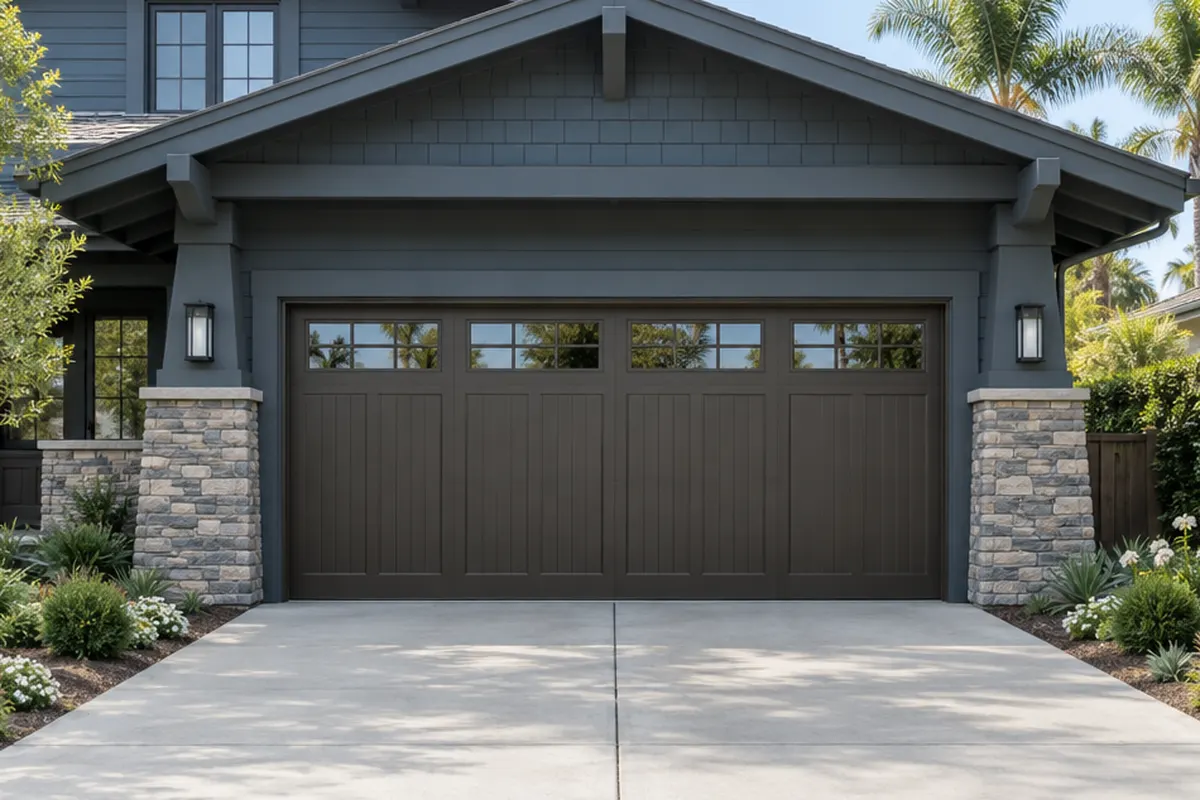
If the door has no wind label or has been damaged more than once, ask about a wind-rated replacement. Your local building department decides which rating applies, and the reinforcement adds weight that can change the spring size and the opener you need. See new garage doors. Also read wildfire embers and garage doors, since Santa Ana winds often bring fire weather.
Where we come in
Emil Garage Doors repairs and installs garage doors and openers in Southern California, for example in Santa Clarita, Ontario and Riverside. After a wind event, call (213) 340-4232 or send the estimate form, and tell us what you saw. Our $89 12-point safety inspection covers the springs, cables, rollers, tracks, sensors and opener.
Questions people ask
What are Santa Ana winds?
The National Weather Service describes them as strong, hot, dust-bearing winds that descend from the inland desert to the Pacific coast in southern California.
When do Santa Ana winds happen?
A NOAA National Weather Service bulletin says they are most common from October through March and typically last one to five days, though some last ten days or more.
Can strong wind damage a garage door?
Yes. IBHS lists weak tracks, flying debris and weak attachment as ways a door fails in high wind, and it warns that a failed door can lead to roof and wall damage.
Will my garage door work in a power outage?
Not by itself. A battery backup, which California requires on residential openers sold or installed in the state, can keep it working. Otherwise you can disconnect the opener with the release handle and move the door by hand.
Keep reading
Sources
- National Weather Service glossary: Santa Ana wind
- NOAA National Weather Service Science and Technology Infusion Climate Bulletin: Santa Ana Events in California (Murphree et al., 2018)
- IBHS: research finds a strong garage door is key to preventing a cascade of damage during severe weather
- City of Riverside: Public Safety Power Shutoff program
- California Health and Safety Code section 19892 (battery backup for residential garage door openers)
- DASMA Technical Data Sheet 167: Residential Sectional Garage Door and Electric Operator Checklist for Home Inspectors and Consumers