
An electric gate that stops short, reverses or will not latch is usually reacting to something in its path, a dirty or misaligned sensor, a gate that drags or sags, or a latch that no longer lines up. Clear the path, wipe the sensor lenses and move the gate by hand to feel for drag. Do not force the operator or bypass a sensor.
Why a gate stops short or reopens
A gate operator is built to back off when it senses trouble. A residential gate operator is a Class I operator under UL 325, the safety standard for gate operators, and the standard calls for entrapment protection so a closing gate does not trap a person or vehicle. When the gate stops short and reopens, the operator is often doing exactly what it was designed to do.
The job is to find out what it is reacting to. Start with the simplest causes and work toward the ones that need a technician.

Symptom to likely cause
| What you see | Likely cause | Who fixes it |
|---|---|---|
| Gate closes, then stops and reopens | Something in the path, or a dirty or misaligned sensor | You can check the path and wipe the lenses; call if it continues |
| Gate stops a few inches short of the post | Sag, a binding hinge or wheel, or a limit setting that has drifted | A technician |
| Gate closes but the latch will not catch | Latch and strike no longer line up because the gate has dropped or the post has moved | A technician |
| Gate only moves in short jerks | Drag in the hinges, wheels or track, or a weak battery on a battery-backed system | A technician |
Sensor and limit settings differ by brand. Your operator's manual lists the exact steps for your model.
Five checks you can do safely
Look at the path
With the gate stopped, look along the whole travel for a branch, a stone, a toy, a raised patch of ground or anything the gate could touch. Hunker's operator guide lists a gate scraping the ground or a branch as common causes.
Clean the sensor lenses
Wipe each photo-eye lens with a damp cloth. Dirt on a sensor can cause a false reading. Check that the indicator light is steady, not blinking.
Look for a gate that has dropped
Check whether the gate rubs the ground, the post or the latch plate. A gate that has sagged will not meet its latch.
Try the gate by hand
Use the manual release as your manual shows, keep people and pets clear, and move the gate. UL 325 says an operator belongs only on a gate that moves freely in both directions, so a gate that is stiff by hand has a mechanical problem.
Write down what you saw
Note any blinking light codes, the point where the gate stops and whether it happens in cold, rain or heat. That helps a technician find the cause quickly.
Do not raise the force setting, tighten the clutch or tape over a sensor to make the gate close. UL 325 specifically warns against overtightening the clutch or pressure relief to make up for a damaged gate.
Limits, force and latches
Two settings decide where the gate stops and how hard it pushes: the travel limits and the obstruction force. If either has drifted, the gate can stop early or reverse on normal resistance. They are set to your operator's manual and they matter for safety, so they are a technician's job.
A latch or magnetic lock can also stop a gate from closing fully. If the gate reaches the latch and the latch does not catch, the cause is almost always alignment: the gate has moved, not the lock.
When to stop and call
- The gate is crooked, drops at one end or rubs the ground
- It reverses every time even though the path and sensors are clear
- You hear grinding, or see a bent arm or a torn-out bracket
- The gate will not close and the property is open to the street
- Anyone has been struck, even lightly, by a closing gate
A gate is heavy and carries a motor. Keep children and pets away from it until it is fixed.
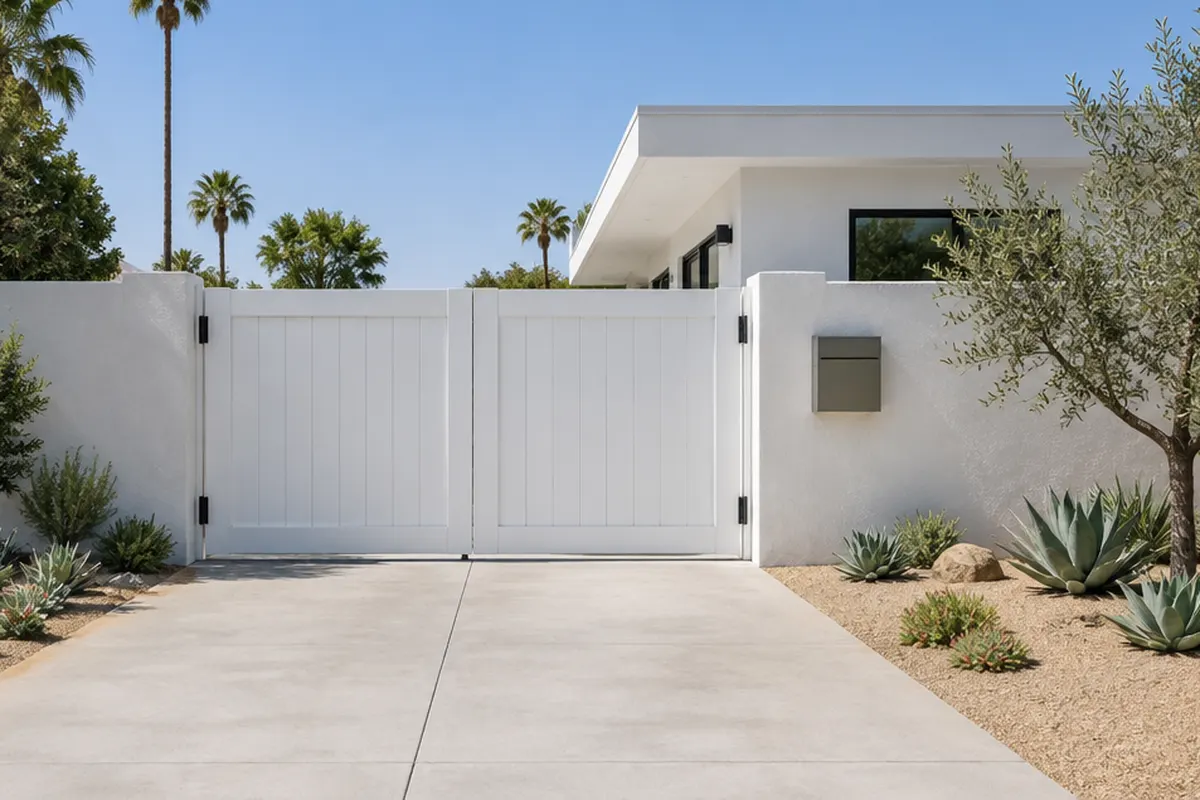
Get it fixed
Emil Garage Doors repairs electric gates and operators for Southern California homes, including in Santa Ana, El Centro and Camarillo. Call (213) 340-4232 or send the estimate form with the brand of your operator and what the gate does, and we will tell you what to expect. See electric gate repair and gate repair.
Questions people ask
What should I do if my electric gate won't fully close?
Clear the path, wipe the sensor lenses and check whether the gate rubs the ground or the post. If it still stops short or reverses, call a technician rather than raising the force setting.
How do I troubleshoot an automatic gate that doesn't fully close?
Check the path, clean and check the sensors, then try the gate by hand with the manual release. A gate that is stiff by hand has a mechanical problem that the operator cannot fix.
What causes automatic gate latch problems?
Most latch problems come from alignment. The gate has dropped or the post has moved, so the latch and strike no longer meet.
Can I turn up the force so the gate closes?
No. Higher force can push a gate into a person or vehicle. UL 325 warns against overtightening the clutch to make up for a damaged gate.