
In snow country the garage door fights ice at the floor, snow in the path of the sensors and a lot more daily trips. Clear the bottom edge before you press the button, never force a door frozen to the concrete, and keep ice melt off the panels. If the door feels heavy, bangs or hangs crooked, stop and call a technician.
Quick answers
Can snow damage a garage door?
Snow itself rarely does, but ice at the bottom edge can freeze the seal to the floor, and forcing the door open can tear the seal or strain the opener and springs. Clear the edge before you open the door.
Why does my garage door not close after a snowfall?
Often a sensor is blocked or misaligned, or ice or debris is in the path. Clear the path, wipe the lenses and check that the two sensors face each other.
Can I use ice melt near my garage door?
Clopay advises against ice melt on and around the door because it can damage doors, especially metal ones. Chip the ice or use warm water, and wash off any ice melt that lands on the door.
Should I keep pressing the button if the door is stuck?
No. Release the door, clear the ice and try again. Pressing the button over and over makes the opener pull against the ice and strains the cables and springs.
The full explanation
What a Utah winter asks of a garage door
A garage door is the largest moving part of a house, and in winter it sits between a heated room and the weather. Snow piles against the bottom edge, melt water runs under it and freezes overnight, and the door gets used more often because people are loading cars in the dark.
The National Weather Service office in Salt Lake City trains spotters to report snow squalls: short bursts of moderate to heavy snow, often with strong gusty wind. The main thing that sets a snow squall warning apart is a flash freeze, which is exactly when a wet driveway turns to ice at the foot of your door.
Frozen to the floor
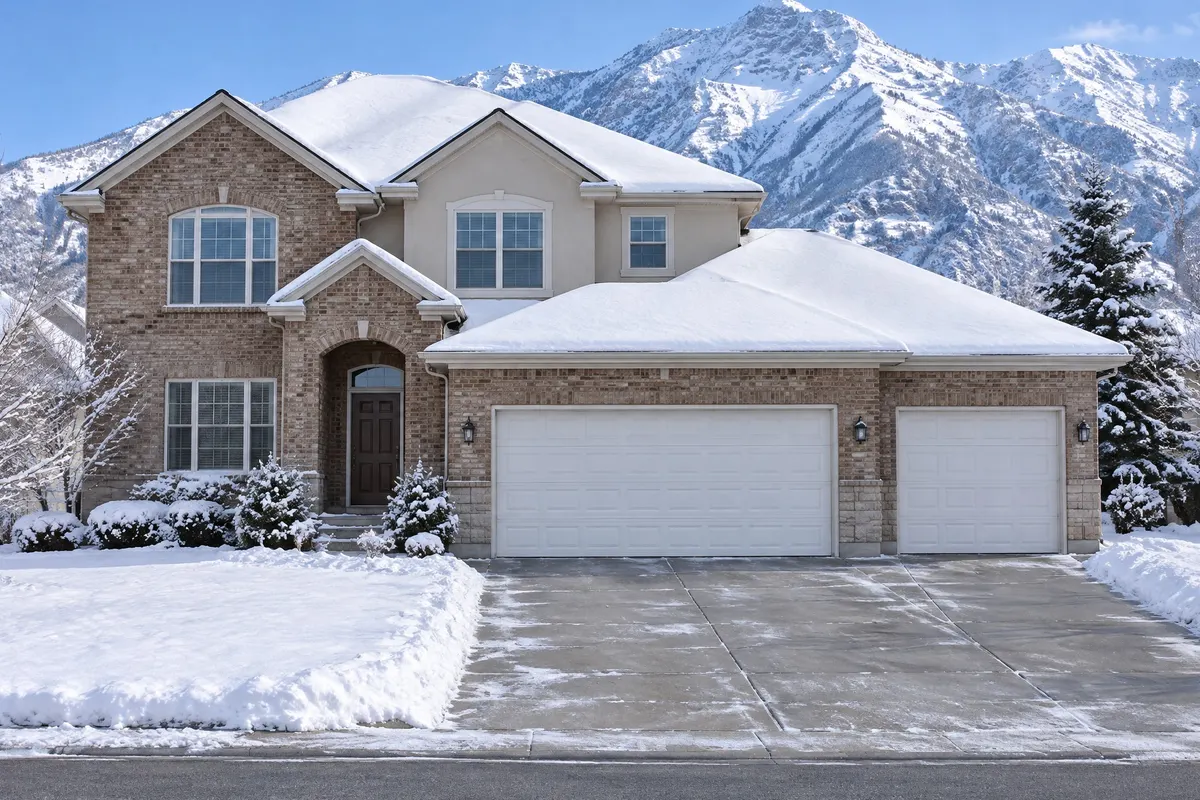
Clopay, a door manufacturer, says the bottom seal can freeze to the concrete when it sits in water or wet snow. Its advice is to avoid forcing the door open, because that can tear the seal and let water, snow and cold air in.
Chip the ice away gently or melt it with warm water, then raise the door and dry the floor so it does not freeze again. Clopay also warns against ice melt, which can damage doors, especially metal ones. If ice melt lands on the panels, wash it off as soon as you can.
A frozen door that will not lift makes the opener pull against the ice. That strains the opener, the cables and the springs. If the door does not move after a gentle try, release it, clear the ice and try again. See opener repair if the opener keeps struggling after the ice is gone.
What you see and what it means
| What you see | What it likely means | What to do |
|---|---|---|
| Door will not lift, bottom edge stuck | The seal is frozen to the floor | Stop, clear the ice, dry the floor, then try again |
| Door goes down, then bounces back up | A sensor is misaligned or something is in the path, such as ice or debris | Clear the path and check that both sensors face each other |
| White crust on the panels | Ice melt or road salt residue | Rinse it off and dry the door |
| Door feels heavy or the opener strains | A spring may be weak or broken | Stop using the door and call a technician |
| Loud bang from the garage | A spring or cable may have let go | Keep clear and call a technician |
Causes vary. We confirm them on site.
A short weekly winter check
Clear the bottom edge
Push snow away from the door and the sensors before you press the button.
Look at the seal
A torn, flat or stiff bottom seal lets melt water in and freezes to the floor faster.
Wipe the sensor lenses
Faulty or misaligned sensors can make the door believe it hit something and refuse to close, according to Clopay.
Watch the first lift
A healthy door rises smoothly. A jerk, a scrape or a groan is worth noting.
Rinse off salt
Wash road salt from the lower panels so it does not sit on the finish.
Heavy winter use and your springs
Clopay says the average garage door opens and closes about 1,500 times each year, and that springs are usually rated for 10,000 cycles. At that pace a spring reaches its rating in under seven years. A busy household that uses the door many times a day gets there sooner, and a winter with more trips makes the count climb faster.
Clopay also says cold makes spring wire brittle, which weakens it. You do not need to remember the numbers. Remember the signs: a door that feels heavy, a popping sound or a visible gap in the coil. Spring work is for a trained technician. See spring repair for what we check.
When to stop and call
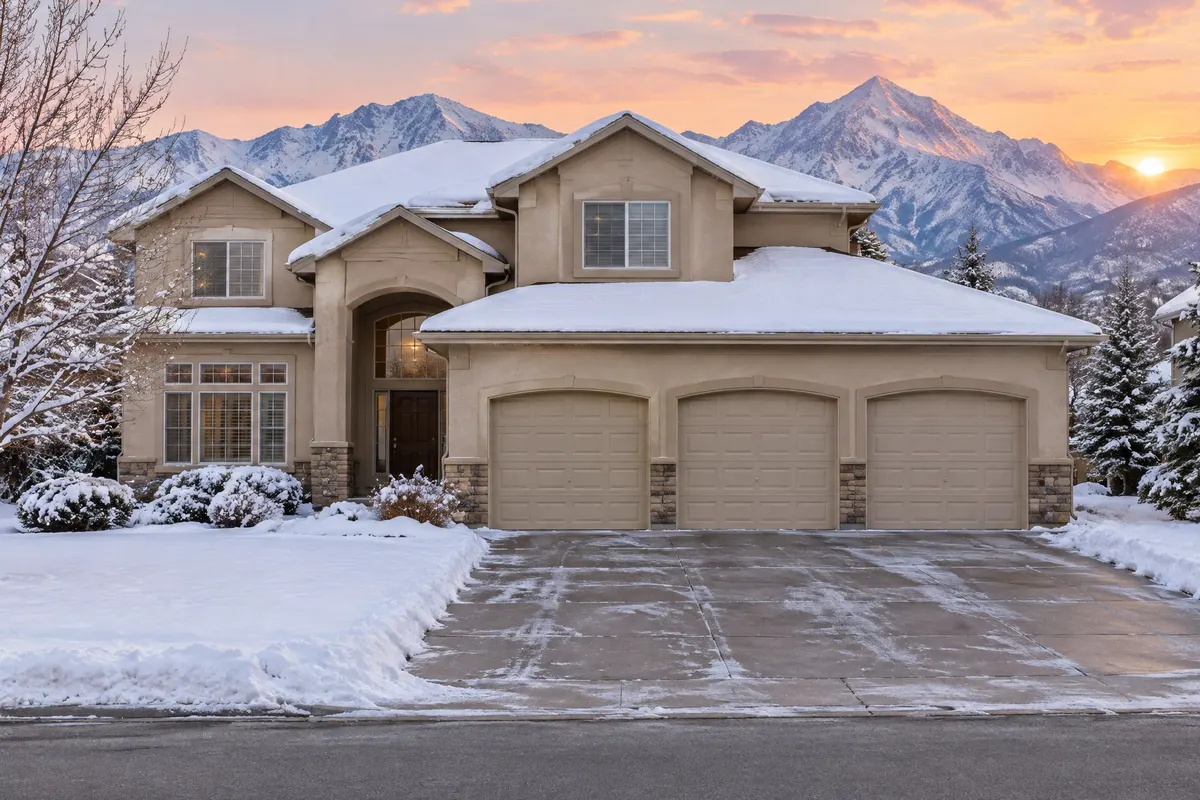
Stop using the door if it hangs crooked, scrapes in the track, will not stay up or bangs. Do not adjust a spring or cable yourself. A door that is stuck on ice and moves freely once cleared is usually a cleaning job. A door that is still hard to lift after the ice is gone is not.
Emil Garage Doors repairs garage doors, springs, cables and openers and installs new doors in Utah, including Salt Lake City, Millcreek and Murray. Call or send your details with a photo of the problem and we book the soonest visit. See garage door repair for the full list of what we fix.
Related services
Need help near you?
We repair and install in these cities. Each page has local notes, prices and reviews.
Keep reading
Sources
- Clopay: Fixing garage door problems from cold weather (springs, lubricant, frozen seals, ice melt, opener release)
- Clopay: Homeowners guide to the garage door spring system (cycles per year, signs of failure, professional repair)
- Clopay: Garage door troubleshooting tips (sensors, debris, ice buildup in winter)
- National Weather Service Salt Lake City: Weather Spotter Training 2025 (Wasatch Front downslope windstorms, snow squalls)