
Gate access control is the set of devices that tell a gate operator to open: keypads, card readers and fobs, radio remotes and receivers, intercoms and vehicle loops. They send a signal and the operator does the moving. Choose by who uses the gate, how often and how far away, and place the controls at least 6 feet from the gate.
What access control does
An automatic gate has two parts: the operator that moves it and the controls that tell it to move. Access control is the second part. A keypad, a card reader, a radio remote, an intercom and an in-ground loop all do the same job. They send an open command to the operator. The operator then checks its safety devices and moves the gate.
That is why a faulty keypad does not mean a faulty gate, and why one operator can have several controls at once. A home may use a remote for the family and a keypad for visitors. A shared driveway may add cards or fobs.
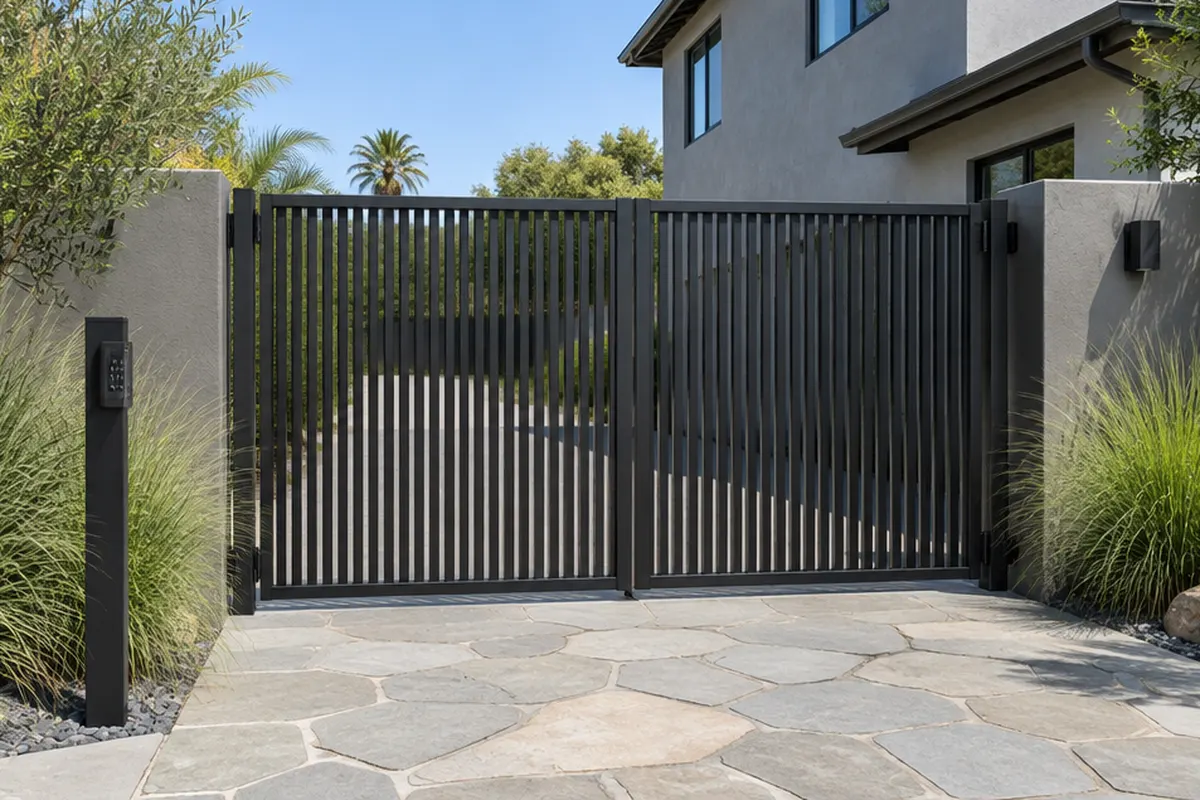
Keypads
A keypad lets a person type a code. It needs no remote and no card, so it suits guests, cleaners and delivery drivers. A code can be changed when someone moves away. Keypads can be wired to the operator or wireless, and a wireless one needs batteries.
Outdoor keypads take weather, salt, sand and sometimes vandalism. Installer guidance lists dead batteries and contaminants like salt and sand among the causes of keypad failure. Pick one made for outdoor use, and expect to change its batteries.
Card readers and fobs
A reader opens the gate when a card or fob is held to it. Proximity readers work at short range, so the driver has to stop close to the reader. Cards suit gates shared by many users because you can disable one lost card without changing a code for everyone.
Simple readers connect straight to the operator. Larger systems use a separate controller that decides who is allowed in, which is more than a single-family home usually needs.
Radio remotes and receivers
A remote sends a radio signal to a receiver, often built into the operator or added as a separate unit. It lets a driver open the gate from the car. Range depends on the remote, the receiver, the antenna and what stands in between. Installer guidance says to keep the antenna clear of bushes, trees and buildings.
Remotes are paired to the receiver, so adding or replacing one may mean a learn step. See keypad and remote not working if yours stopped.
Intercoms, loops and exit controls
An intercom lets a visitor call you and lets you open the gate from inside. Loops are wires in the pavement that detect a car, so the gate opens when a driver arrives or leaves and holds open while a car is on it. A trade article on operator technology notes that loops can fail from pavement damage or freezing water, and describes laser and other sensors as alternatives. More on intercom and video systems is in gate intercom and video systems.
What to ask before you choose
- Who uses the gate: family only, guests, deliveries, tenants?
- Do you need to cancel one user without changing everyone's code?
- How far from the gate will drivers stop?
- Wired or wireless, given the distance and interference?
- Is the operator listed to UL 325 and does the control work with it?
- Where will the control go, and is power or wiring available there?
DASMA's guidance on UL 325 says all gate activation controls must be at least 6 feet from the gate, to reduce reach-through injuries. It also says vehicle gate operators are for vehicle gates only, so pedestrians need a separate safe way through.
Fire department access
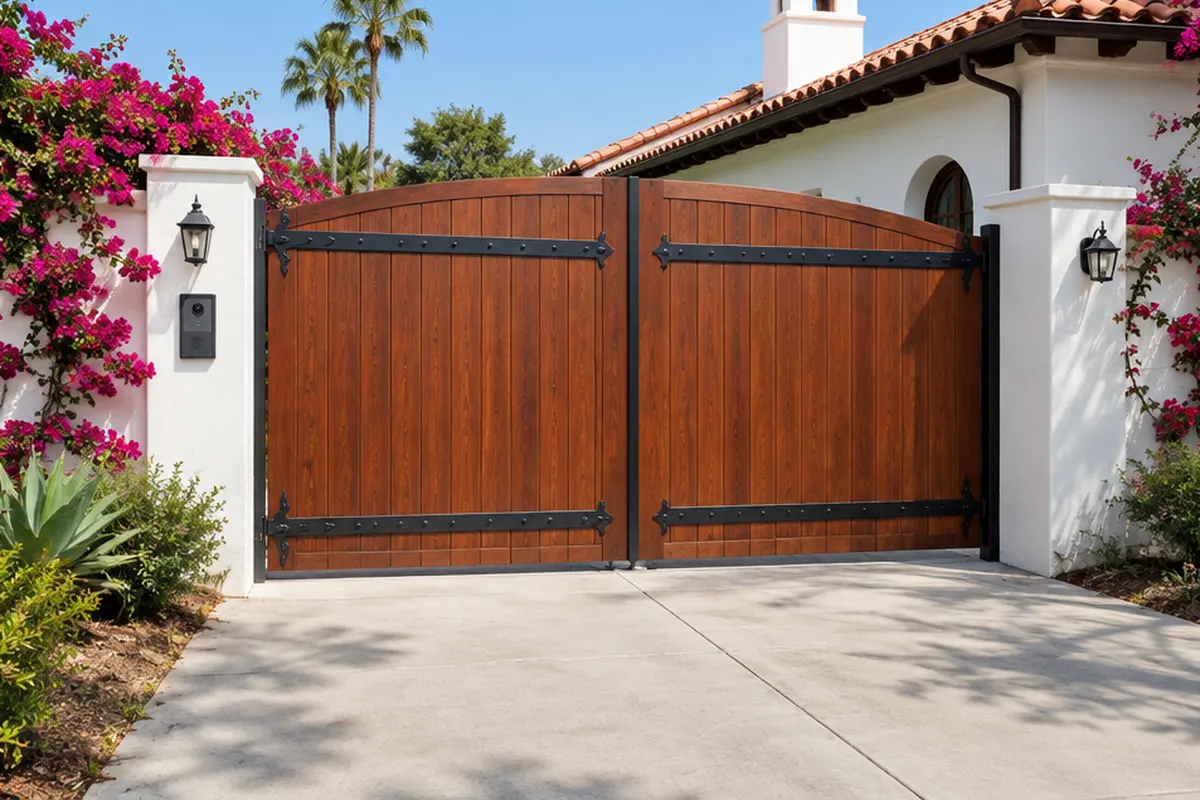
A gate across a fire apparatus access road is a special case. The California Fire Code, section 503.6, says such a gate needs to be approved by the fire code official, must have an approved means of emergency operation and must keep that emergency operation working at all times. Your city or fire district decides what it requires, so ask before you add or change a control. See permits and fire access for driveway gates.
Where we come in
Emil Garage Doors installs and repairs access control, remotes and gate operators in Southern California, including in Imperial Beach, Moorpark and Perris. See access control and remotes and parts. Call (213) 340-4232 or send the estimate form and tell us who uses your gate.
Questions people ask
What are the main types of gate access control?
Keypads, card readers and fobs, radio remotes with receivers, intercoms, and vehicle loops or sensors. All of them tell the operator to open.
Which is better for a home, a keypad or a remote?
Many homes use both. Remotes suit the family. A keypad lets guests and workers in without a remote, and a code can be changed.
How far from the gate should a keypad be?
DASMA's UL 325 guidance says gate activation controls must be at least 6 feet from the gate.
Can I add a card reader to my existing gate?
Often yes, if the operator accepts it. A technician checks the model and the wiring before you buy.
Keep reading
Sources
- DASMA Technical Data Sheet 353: Vehicular Gate Operators and the ANSI/CAN/UL 325 Standard
- Locksmith Ledger: the ins and outs of current gate operator technology
- Creative Door Services: automatic gate troubleshooting, fixing keypad issues
- Hunker: how to troubleshoot a Mighty Mule gate opener
- California Fire Code section 503.6, security gates and emergency operation (GoCodeBook)